


It is easy to see the damage the policies of the Kirchner government have inflicted on the Argentine agricultural sector. The heretofore large export taxes starved it of capital. Most farmers have not been able to make the investments they need in equipment, fertilizers, conservation, agrichemical, and storage facilities.The first thing one learns when visiting Argentina is that farmers and others in the agricultural sector are suddenly very optimistic in the wake of the new export policies for agricultural commodities established by the government of President Mauricio Macri. No longer does this sector see the government as the enemy as they did under President Cristina Kirchner. Instead, it views the government as an ally. Farmers now hav...


 What You Need to Know Today: After a period of limited activity, USDA reported a sizeable 613 KMT in soybean export sales, including 330 KMT to China and 283 KMT to unknown destinations, potentially also China. The purchases represent a meaningful pickup in demand and bring China closer to ful...

 The Trump import plan for 300,000 MT of beef supplies used for ground beef, i.e., lean trim, from September through November has, according to Secretary Brooke Rollins, brought some relief to beef prices. The Executive Order states that the Secretary of Agriculture will analyze and review the m...
 Key Takeaways: Texas illustrates the assumptions underlying the 2025 FMMO reform; Idaho exposes their limitations. The Southwest order blend (roughly 27 percent Class I, 32 percent Class III and 31 percent Class IV) exposes Texas producers to every lever USDA adjusted, with a near-neutral proj...

From WPI Consulting
Infrastructure investment due diligence
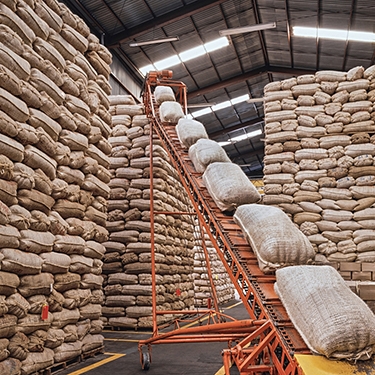
On behalf of a Canadian oilseed processer WPI's team provided market analysis, econometric modeling and financial due diligence in support of a $24 million-dollar investment in a Ukrainian crush plant. Consistent with WPI's findings, local production to supply the plant and the facility's output have expanded exponentially since the investment. WPI has conducted parallel work on behalf of U.S., South American and European clients, both private and public, in the agri-food space.