
Bernie Sanders attracted attention this week by declaring AI a “public resource” and calling for a 50 percent tax on AI companies to fund a sovereign wealth fund. Critics reacted by saying the idea proved that Sanders doesn’t understand AI or business, which is probably true of both his supporters and many other Americans. The same critique can be made of those charging monopoly control by agribusinesses like supermarkets and meat packers, industries with minimal or even negative profits. These barely treading water agribusinesses are cited by economist Noah Smith in explaining his reversal of understanding on market power. He had read the economics literature on the adverse impacts of monopoly power, which le...



 What You Need to Know Today: New World screwworm is back in the headlines after new cases were found in a hunter-harvested elk in Texas and a beef cow in New Mexico. The detection in wildlife could further complicate containment efforts, as implementing effective biosecurity measures is consid...

 Cattle on Feed Expectations USDA’s monthly Cattle on Feed report that will show cattle inventory statistics as of 1 October will be released tomorrow, 23 October. Analysts’ pre-report consensus estimates are for the total inventory on feed to be 100.3 percent of last year, which imp...

 Key Takeaways: Dry bulk markets remain mixed with Capesize rates turning around from their recent weakness and posting solid gains on improved Chinese demand. Panamax vessels, on the other hand, saw rates decline amid greater tonnage availability in the South Atlantic and falling U.S. Gu...

From WPI Consulting
Infrastructure investment due diligence
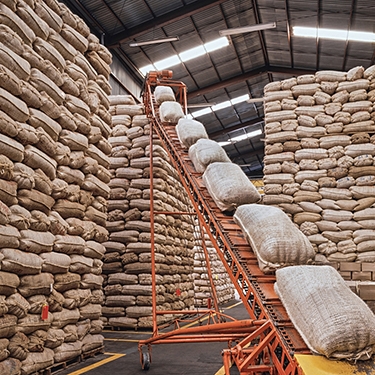
On behalf of a Canadian oilseed processer WPI's team provided market analysis, econometric modeling and financial due diligence in support of a $24 million-dollar investment in a Ukrainian crush plant. Consistent with WPI's findings, local production to supply the plant and the facility's output have expanded exponentially since the investment. WPI has conducted parallel work on behalf of U.S., South American and European clients, both private and public, in the agri-food space.