


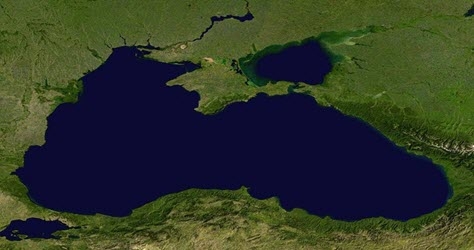
Russian Grain Markets: 30 July-3 August 2018 Expecting international market prices to grow further, Russian grain traders limited their offer. Milling wheat export prices increased $9/MT to $232/MT FOB Black Sea, and purchase prices at seaports climbed to $179/MT CPT-Black Sea port. The average feed barley export price gained $5/MT to reach $225/MT FOB, and the average purchase price rose to $187/MT CPT-Black Sea port. GEOGRAPHICALLY 3rd grade soft milling wheat prices grew in the South (+$8.40), Volga Valley (+$0.30/MT), Central (+$2.50/MT), Black Soil (+$1.30/MT) and Siberia (+$0.80/MT), but they remained unchanged in Ural. 4th grade soft milling wheat prices increased in the South (+$7.60/MT), Volga Valley (+$0.70/MT), Ural (+$0.40/...


 What You Need to Know Today: Russia rejected calls for a ceasefire in the Black Sea, including a proposal to halt attacks on civilian shipping that could help restore grain flows from Ukrainian ports. Tyson Foods announced plans to permanently close its Joslin, Illinois, beef processing facili...
 We have described the long-term investment climate in crop and livestock production, using data primarily from the Bureau of Economic Analysis (BEA). The data provided background on the current investment climate and outlook for agricultural capital formation. Our conclusion was that investment...

From WPI Consulting
Illuminating the value of technical research

On behalf of a commodity producer organization, WPI evaluated the outputs from a project that featured a $5 million investment into technical research over multiple years. WPI’s team captured the results of this extensive effort and synthesized them for presentation to the organization’s governing board; among the findings uncovered and presented for the first time was the development of genomic traits proven, via rigorous testing, to provide crop yield advantages of 50 percent or more to U.S. farmers in times of drought. Capturing measurable results from long-term efforts can be challenging. Educating clients on the dynamics of success measurement when quantifiable results are not readily available requires deep client-consultant collaboration and an ability to consider both near- and long-term client aspirations with market/policy dynamics – attributes that WPI brings to every consulting engagement.