
The Cahiers de doléances [or kaje for short] were the pre-French revolution (1789) lists of societal complaints. The collective disappointments of the clergy, the nobility, and the rest of society too. Nothing has changed. Documents of the time cite the criticisms as: government waste, indirect taxes, church taxes and corruption, and the hunting rights of the aristocracy. Money, corruption, and privilege. It caused a revolution. So, imagine the fright in Brussels when this winter (2024), 10,000 German farmers with 3,000 tractors mount a protest in Berlin, and their complaint spreads like wildfire to multiple member states. The protest began a few years ago in the Netherlands where farmers are just 1.5 percent of the population...


 WPI Grain Prices and Freight Rate App Note: you can also visit the app directly by clicking here. Supplemental Information The section below offers a concise view of the options available in the current version of the WPI FOB Price and Freight Rate app, along with a short “How To”...
 Key Takeaways: Dry bulk markets are mixed this week with the Capesize sector seeing a sharp correction from its recent rally. Smaller vessel classes are steady/firmer but the Chinese Golden Week Holiday is pressuring near-term rates. Dry bulk freight did not receive the bullish boost it...


 Key Takeaways: Russia recently said it would convert existing export terminals in the Baltic and Arctic Seas to handle grain as the Black and Azov Seas remain closed to maritime trade. Futures markets reacted negatively to this news, but does the conversion matter to short-term and long-...


 There was encouraging news over the weekend: the White House may reject the misguided idea on Capitol Hill to ban U.S. diesel exports. What WPI has noted previously was perhaps best put by a Department of Energy report of 2022, under the Biden administration: Petroleum liquids markets are globa...

From WPI Consulting
Infrastructure investment due diligence
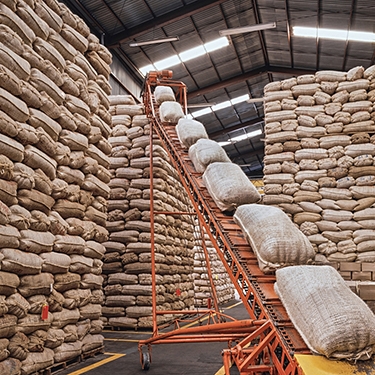
On behalf of a Canadian oilseed processer WPI's team provided market analysis, econometric modeling and financial due diligence in support of a $24 million-dollar investment in a Ukrainian crush plant. Consistent with WPI's findings, local production to supply the plant and the facility's output have expanded exponentially since the investment. WPI has conducted parallel work on behalf of U.S., South American and European clients, both private and public, in the agri-food space.