

China’s economic slowdown may have a direct negative impact on the volume of copper or crude oil it imports, but does this have a similar effect on its imports of soybeans?These days, an attempt to analyze what lies ahead for financial or commodity markets in 2016 is bound to refer to China in the first paragraph if not the very first sentence. As it rose to become the world’s second-largest economy during the past decade, China’s growing demand for imported energy and raw materials was one of the main factors that supported the long bull market in commodities. The world came to depend on a Chinese economy in which its gross domestic product (GDP) had increased an average 10 percent annually for nearly 30 years. Thus when China recently ann...



 What You Need to Know Today: Russia rejected calls for a ceasefire in the Black Sea, including a proposal to halt attacks on civilian shipping that could help restore grain flows from Ukrainian ports. Tyson Foods announced plans to permanently close its Joslin, Illinois, beef processing facili...

 The big news in the cattle markets yesterday was Tyson Foods’ move to close two more beef plants. One of them, the Joslin, Illinois, plant was shuttered immediately after the announcement. The other, in Eagle Mountain, Utah, is a case-ready plant that does not slaughter cattle. Tyson also...

 The Bureau of Labor Statistics (BLS) released the Consumer Price Index (CPI) on Wednesday. In July, the CPI rose 0.1 percent, seasonally adjusted, and rose 3.4 percent over the last 12 months, not seasonally adjusted. The index for all items less food and energy, or the “core” infla...

From WPI Consulting
Infrastructure investment due diligence
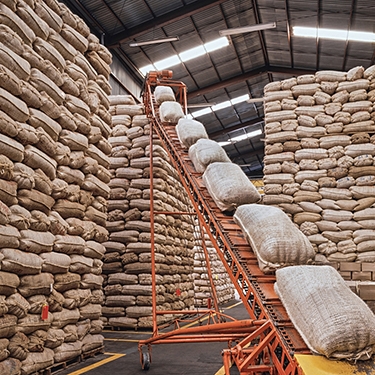
On behalf of a Canadian oilseed processer WPI's team provided market analysis, econometric modeling and financial due diligence in support of a $24 million-dollar investment in a Ukrainian crush plant. Consistent with WPI's findings, local production to supply the plant and the facility's output have expanded exponentially since the investment. WPI has conducted parallel work on behalf of U.S., South American and European clients, both private and public, in the agri-food space.