



There is still some skepticism as to whether China will buy all of the agricultural commodities that the Trump Administration is touting but if farmers have any doubts they should be selling now while the market is reacting positively. The March corn futures contract today stands 17 cents more a bushel than before an agreement was announced. Moreover, the volume of the corn contracts traded has increased 40 percent. There has been less reaction on the volume side in the soybean pit, but January soybeans are up almost 30 cents a bushel, and March SRW is also up nearly 30 cents with volume 32 percent higher today than last week. These values could rise higher once the agreement language is known and/or actual purchases become vi...


 Key Takeaways: Dry bulk markets remain mixed with Capesize vessels seeing continued pressure from weaker demand while fixtures and rate strength gradually increases towards the smaller vessel classes. Tanker markets are pulling back from their recent highs as tonnage moves out of the Mid...

 The Trump import plan for 300,000 MT of beef supplies used for ground beef, i.e., lean trim, from September through November has, according to Secretary Brooke Rollins, brought some relief to beef prices. The Executive Order states that the Secretary of Agriculture will analyze and review the m...
 Key Takeaways: Texas illustrates the assumptions underlying the 2025 FMMO reform; Idaho exposes their limitations. The Southwest order blend (roughly 27 percent Class I, 32 percent Class III and 31 percent Class IV) exposes Texas producers to every lever USDA adjusted, with a near-neutral proj...

From WPI Consulting
Infrastructure investment due diligence
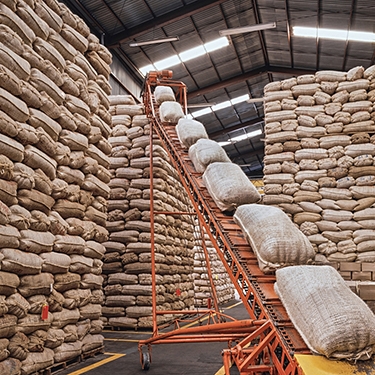
On behalf of a Canadian oilseed processer WPI's team provided market analysis, econometric modeling and financial due diligence in support of a $24 million-dollar investment in a Ukrainian crush plant. Consistent with WPI's findings, local production to supply the plant and the facility's output have expanded exponentially since the investment. WPI has conducted parallel work on behalf of U.S., South American and European clients, both private and public, in the agri-food space.