World Perspectives

China Market Analysis

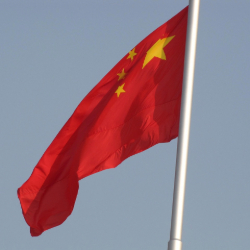
War and China The U.S. and Israeli attacks on Iran also involve China, tangentially if not directly. Iran has been supplying about 13.4 percent of China’s oil imports, roughly 1 million barrels per day. The attacks follow the U.S. removal of Venezuela’s leader, a country that is a smaller supplier of oil to China but still important. Beijing has called the attacks unacceptable, reckless, destabilizing, and has demanded restraint. But thus far it has only used words. Oil is fungible. Supplies from Russia and other Middle East countries will likely increase, but they will come at a higher price.  President Trump says he may provide military security for shipping through the Strait of Hormuz, through which a fifth of traded oi...

Related Articles
feed-grains soy-oilseeds wheat

Market Commentary: Fundamentals in the Backseat; Conflict Impacts Driving Markets

Four days into the U.S.-Iran conflict, it is becoming apparent that the conflict will last longer than a few days, and impacts could be more widespread than expected. That sentiment drove macroeconomic and commodity futures markets on Tuesday, which meant risk-off trading in the macro sector an...

Schumer Planning a Bill to Force Divestiture in Meat Industry

Senate Minority Leader Chuck Schumer (D-N.Y.) is currently seeking co-sponsors for a bill he will introduce as early as Thursday of this week, the Family Grocer and Farmer Relief Act. The plan promises to “break up dominant meatpackers, rein in foreign-controlled corporate giants, and use...

feed-grains soy-oilseeds wheat

Market Commentary: Gulf Conflict Creates Volatility but Little Support for Grains

The primary drivers of Monday’s grain trade were, of course, the U.S. and Israel’s weekend attacks on Iran that killed the latter country’s Supreme Leader Khamenei and the subsequent cascade of impacts on global markets. WPI covers these impacts in more detail in our nearby ar...

feed-grains soy-oilseeds wheat

Market Commentary: Fundamentals in the Backseat; Conflict Impacts Driving Markets

Four days into the U.S.-Iran conflict, it is becoming apparent that the conflict will last longer than a few days, and impacts could be more widespread than expected. That sentiment drove macroeconomic and commodity futures markets on Tuesday, which meant risk-off trading in the macro sector an...

Schumer Planning a Bill to Force Divestiture in Meat Industry

Senate Minority Leader Chuck Schumer (D-N.Y.) is currently seeking co-sponsors for a bill he will introduce as early as Thursday of this week, the Family Grocer and Farmer Relief Act. The plan promises to “break up dominant meatpackers, rein in foreign-controlled corporate giants, and use...

feed-grains soy-oilseeds wheat

Market Commentary: Gulf Conflict Creates Volatility but Little Support for Grains

The primary drivers of Monday’s grain trade were, of course, the U.S. and Israel’s weekend attacks on Iran that killed the latter country’s Supreme Leader Khamenei and the subsequent cascade of impacts on global markets. WPI covers these impacts in more detail in our nearby ar...

farm-inputs energy

Conflict in the Gulf: Impacts on Shipping and Energy

For weeks now, global energy and geopolitical markets have been speculating about a possible conflict in the Middle East between Iran and the U.S., but they still seemed unprepared and entirely surprised by what happened this weekend. Without going into the details that news outlets have alrea...

Image
From WPI Consulting

Forecasting developments in production agriculture

On behalf of a private U.S. agricultural technology provider, WPI’s team generated an econometric model to forecast the movement of concentrated corn production north and west from the traditional U.S. Corn Belt. WPI’s model has subsequently provided quantitative support to a multi-million-dollar investment into short-season corn variety development. WPI’s methodology included a series of interviews with regional grain elevators and seed consultants. Emphasizing outreach and communication with stakeholders who possess intimate sectoral knowledge – on-the-ground insights – is a regular component of WPI’s methodologies, made possible by WPI’s ever-growing network of industry contacts.

Search World Perspectives

Sign In to World Perspectives

Don’t have an account yet? Sign Up
