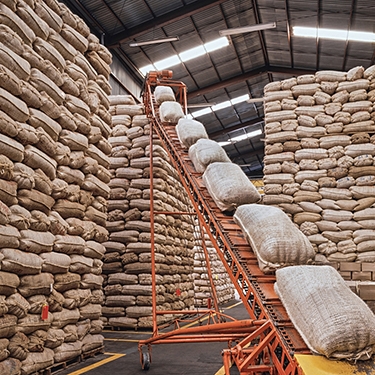
Moving the Goal Posts China is a critical demand driver for U.S. soybean farmers and they rallied when the White House announced on Halloween that China had committed to buying 12 MMT of soybeans by year’s end, and then 25 MMT over the coming three years. There were ample skeptics at the time. After all, China had just accelerated its November purchases of Brazilian soybeans by 67 percent, a period typically dominated by U.S. suppliers. The economics of China’s domestic prices, storage capacity and ship lineups all undermined the political assertion that Beijing would now suddenly pile on another 12 MMT of American soybeans.
China’s initial purchase of 3-4 MMT of U.S. soybeans helped stall an implosion in the market...



 In a recent social media post, R-CALF unveiled its latest cattle market plan: “contracts that bind producers before establishing a base price, then tie that price to future negotiated cash transactions, should be prohibited.” That proposal aligns with recent legislation by Represent...

 Key Takeaways: Russia recently said it would convert existing export terminals in the Baltic and Arctic Seas to handle grain as the Black and Azov Seas remain closed to maritime trade. Futures markets reacted negatively to this news, but does the conversion matter to short-term and long-...


 There was encouraging news over the weekend: the White House may reject the misguided idea on Capitol Hill to ban U.S. diesel exports. What WPI has noted previously was perhaps best put by a Department of Energy report of 2022, under the Biden administration: Petroleum liquids markets are globa...

 Key Takeaways: Comparative advantage encourages countries to specialize in goods they can produce at a lower opportunity cost and rely on trade for others. Differences in climate, land, infrastructure, and technology help determine where agricultural commodities can be produced most efficientl...