
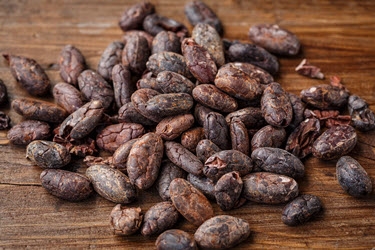
Recently, WPI has received requests from a few clients to provide some analysis on the cocoa market. Clearly, there is a reason for this request as cocoa prices have been exceptionally volatile and futures more than doubled over the nine months from August 2023 through April 2024. In this article, we first explore the basics of cocoa production (which we thought valuable given the infrequency with which we discuss the crop) and subsequently move into an analysis of what drove the recent price rally and the outlook for the 2024/25 crop. Since this is a topic we cover infrequently, we’d appreciate your thoughts, especially if you want to see more (or less) information about cocoa and the other “softs” comm...


 Key Takeaways: A student group from the University of Chicago is protesting to bring back onion futures trading. Trading in onion futures was banned in 1958 following a spectacular bout of market manipulation that resulted in a corner of the physical market. The ban on onion futures led t...
 WPI Grain Prices and Freight Rate App Note: you can also visit the app directly by clicking here. Supplemental Information The section below offers a concise view of the options available in the current version of the WPI FOB Price and Freight Rate app, along with a short “How To”...


 Yesterday, Alberta held a referendum on whether to begin the process toward independence from Canada. With more than one million votes counted as of early Tuesday morning, around 77 percent supported remaining in Canada, and 23 percent voted to start the process of separation, according to unof...

From WPI Consulting
Illuminating the value of technical research

On behalf of a commodity producer organization, WPI evaluated the outputs from a project that featured a $5 million investment into technical research over multiple years. WPI’s team captured the results of this extensive effort and synthesized them for presentation to the organization’s governing board; among the findings uncovered and presented for the first time was the development of genomic traits proven, via rigorous testing, to provide crop yield advantages of 50 percent or more to U.S. farmers in times of drought. Capturing measurable results from long-term efforts can be challenging. Educating clients on the dynamics of success measurement when quantifiable results are not readily available requires deep client-consultant collaboration and an ability to consider both near- and long-term client aspirations with market/policy dynamics – attributes that WPI brings to every consulting engagement.