Last week we reported on the backlog of propane deliveries across the Corn Belt and noted that farmers who have the capability to use natural gas have a relative advantage. Propane stocks are very near the top of their five-year average, but most of the inventory is in the Gulf, positioned for export and not enough pipeline capacity (at least this year) to the Midwest. Much the same is happening in natural gas, except there is new pipeline capacity into the heartland. The U.S. has added or is adding about 16 billion cubic feet per day (Bcf/d) capacity in 2019. The Energy Department tracks 134 active natural gas pipeline projects and 46 of those are new to 2019. Another will be on-line in 2020, linking production in Colorado to Illinois...



 What You Need to Know Today: Russia rejected calls for a ceasefire in the Black Sea, including a proposal to halt attacks on civilian shipping that could help restore grain flows from Ukrainian ports. Tyson Foods announced plans to permanently close its Joslin, Illinois, beef processing facili...

 The big news in the cattle markets yesterday was Tyson Foods’ move to close two more beef plants. One of them, the Joslin, Illinois, plant was shuttered immediately after the announcement. The other, in Eagle Mountain, Utah, is a case-ready plant that does not slaughter cattle. Tyson also...

 The Bureau of Labor Statistics (BLS) released the Consumer Price Index (CPI) on Wednesday. In July, the CPI rose 0.1 percent, seasonally adjusted, and rose 3.4 percent over the last 12 months, not seasonally adjusted. The index for all items less food and energy, or the “core” infla...

From WPI Consulting
Forecasting developments in production agriculture
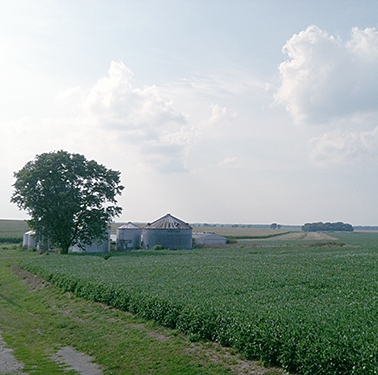
On behalf of a private U.S. agricultural technology provider, WPI’s team generated an econometric model to forecast the movement of concentrated corn production north and west from the traditional U.S. Corn Belt. WPI’s model has subsequently provided quantitative support to a multi-million-dollar investment into short-season corn variety development. WPI’s methodology included a series of interviews with regional grain elevators and seed consultants. Emphasizing outreach and communication with stakeholders who possess intimate sectoral knowledge – on-the-ground insights – is a regular component of WPI’s methodologies, made possible by WPI’s ever-growing network of industry contacts.