
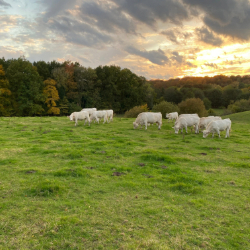
For years, the EU treated its cows, pigs, and broilers mainly as a source of emissions to be reduced. This week the European Commission gave them a new job title: "critical infrastructure." According to the EU’s official livestock strategy presented in Strasbourg, France, livestock underpins "strategic autonomy." Grazing animals guard against land abandonment on the eastern border. Food production is "preparedness." And a sector responsible for about two-thirds of the EU’s farm emissions while using about one-third of its land mass is no longer a problem to manage but an asset to defend. Agriculture Commissioner Christophe Hansen said the sector is "a success story," supporting 7 million jobs and generating €400 billion a y...


 What You Need to Know Today: USDA cut the 2026 corn yield forecast by 1.6 BPA to 179.6, shaving 141 Mbu off the crop. Corn ending stocks were cut by 91 Mbu to a level that pushed the ending stocks-to-use (ESU) ratio to 10.8 percent. Conversely, USDA raised the soybean yield forecast 0.2 BPA to...

From WPI Consulting
Forecasting developments in production agriculture
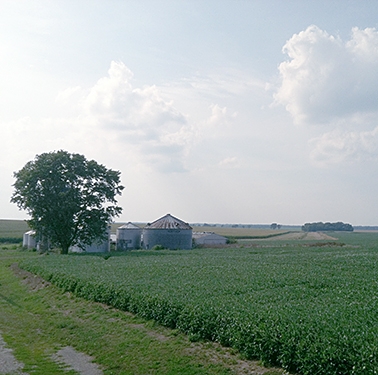
On behalf of a private U.S. agricultural technology provider, WPI’s team generated an econometric model to forecast the movement of concentrated corn production north and west from the traditional U.S. Corn Belt. WPI’s model has subsequently provided quantitative support to a multi-million-dollar investment into short-season corn variety development. WPI’s methodology included a series of interviews with regional grain elevators and seed consultants. Emphasizing outreach and communication with stakeholders who possess intimate sectoral knowledge – on-the-ground insights – is a regular component of WPI’s methodologies, made possible by WPI’s ever-growing network of industry contacts.