


Export Sales and Shipments for February 20-26, 2026. Wheat: Net sales of 203,100 metric tons (MT) for 2025/2026 were down 16 percent from the previous week and 42 percent from the prior 4-week average. Export shipments of 348,900 MT were down 35 percent from the previous week and 24 percent from the prior 4-week average. The destinations were primarily to the Philippines (88,200 MT), Mexico (68,800 MT), South Korea (56,200 MT), Japan (31,700 MT), and Indonesia (22,900 MT). Corn: Net sales of 2,022,600 MT for 2025/2026 were up noticeably from the previous week and up 54 percent from the prior 4-week average. Export shipments of 1,696,000 MT were down 14 percent from the previous week, but up 9 percent from the prior 4-week average. The desti...


 What You Need to Know Today: Corn, wheat, and the soy complex all formed new contract or at least rally highs to close what has become one of the most uniformly bullish weeks in CBOT history. Escalations in the fighting between Russia and Ukraine and attacks on civilian merchant vessels show n...

 The Federal Reserve Board holds an annual meeting in Jackson Hole, Wyoming, each year about this time, and this year’s meeting is now. It’s always a “must-watch” event, but this year, amidst persistent inflation and with a new Fed chairman, Kevin Warsh, it drew additiona...


 You cannot escape the vortex of opinions about water scarcity in the Western United States, especially in the drought-stricken Colorado River Basin. Agriculture is the villain in many of these editorials. Agriculture uses too much water, so it should use less, is the refrain. We all wish it was...

From WPI Consulting
Forecasting developments in production agriculture
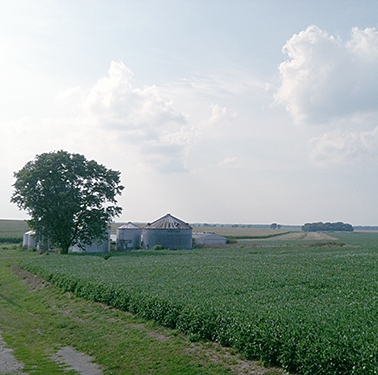
On behalf of a private U.S. agricultural technology provider, WPI’s team generated an econometric model to forecast the movement of concentrated corn production north and west from the traditional U.S. Corn Belt. WPI’s model has subsequently provided quantitative support to a multi-million-dollar investment into short-season corn variety development. WPI’s methodology included a series of interviews with regional grain elevators and seed consultants. Emphasizing outreach and communication with stakeholders who possess intimate sectoral knowledge – on-the-ground insights – is a regular component of WPI’s methodologies, made possible by WPI’s ever-growing network of industry contacts.