
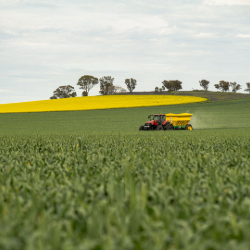
Easing tensions in the Strait of Hormuz, assuming the ceasefire holds, should bring fertilizer prices down, but it could be years before that actually occurs because fertilizer price shocks resulted from not one, but two wars in or near the heart of global fertilizer production. Those wars resulted in lasting damage. First, there was the war between Russia and Ukraine, disrupting the fertilizer pipeline as key production facilities were destroyed. In turn, this led to sanctions and energy shifts in Europe, leading to shrinking fertilizer supplies and price spikes. Then came the war with Iran, halting shipments from global fertilizer producers such as Saudi Arabia, Iran, the UAE, and Qatar. An estimated 24 percent of all global ammonia trade...



 What You Need to Know Today: Headlines emerging from negotiations between President Trump and President Xi were relatively limited, with a more substantive announcement expected Monday. U.S. Trade Representative Jamieson Greer indicated that additional details related to agricultural trade cou...

 The heat of summer is now transitioning into more moderate temperatures, and the next two months have the busiest marketing periods of the year for replacement cattle. Weather always influences the replacement cattle market, and the primary grain belt in the Southern Plains, where many cattle a...


 Key Takeaways: Diesel accounts for about 64 percent of U.S. farm fuel spending. For farmers, the pressing question is what a higher price adds to each field operation. Iowa farm diesel averaged $5.50/gallon in September, compared with the $2.89/gallon Iowa State assumed for its February machin...

From WPI Consulting
Communicating importance of value-added products

Facing increasing pressure to quantify the value of export promotion efforts to investors, a U.S. industry organization retained WPI to develop a quantitative model that better communicated the importance of exports. The resulting model concluded that value-added meat exports contributed $0.45 cents per bushel to the price of corn, increasing support for that sector’s financial support of WPI’s client. In addition to serving the red meat industry with this type of analysis, WPI has generated similar deliverables for the U.S. soybean and poultry/egg industries.