


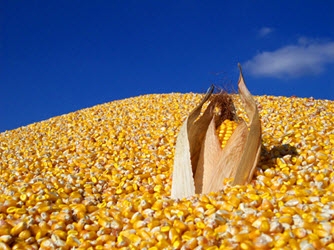
In recent years, a number of agricultural futurists have expressed concern about the ability of the world to increase the food supply enough to feed the world’s population in 2050. The world population currently is about 7.3 billion people, and although the rate at which population is growing is slowing, it is expected to reach close to 10 billion people by mid-century. Much of the growth will be in Africa followed by Asia. In 1798 as world population neared 1 billion people, Thomas Malthus, an English scholar famously wrote that “the power of population is infinitely greater than the power in the earth to produce subsistence for man.” The so-called Malthusian Theory that population growth would eventually exceed th...


 What You Need to Know Today: The conflict between the U.S. and Iran continues to escalate with the two sides exchanging attacks over the weekend. President Trump said Iran “will pay” for recent attacks that claimed the lives of U.S. troops stationed in Jordan. There are some signs...

 Key Takeaways: Russia’s diesel export ban is tightening global fuel supplies and increasing dependence on alternative exporters. Limited refining capacity and logistical constraints make diesel markets especially sensitive to supply disruptions. Diesel supply disruptions are more difficu...

From WPI Consulting
Forecasting developments in production agriculture
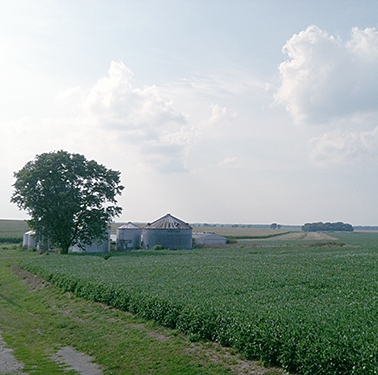
On behalf of a private U.S. agricultural technology provider, WPI’s team generated an econometric model to forecast the movement of concentrated corn production north and west from the traditional U.S. Corn Belt. WPI’s model has subsequently provided quantitative support to a multi-million-dollar investment into short-season corn variety development. WPI’s methodology included a series of interviews with regional grain elevators and seed consultants. Emphasizing outreach and communication with stakeholders who possess intimate sectoral knowledge – on-the-ground insights – is a regular component of WPI’s methodologies, made possible by WPI’s ever-growing network of industry contacts.