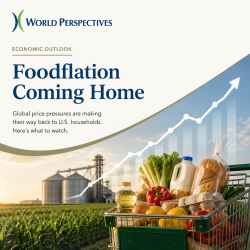
Since the closure of the Strait of Hormuz in February 2026, energy markets have experienced significant disruptions. Crude oil, diesel fuel, and other petroleum products rose sharply as traders responded to uncertainty in one of the world's most important shipping corridors. The question for food manufacturers, retailers, and consumers is straightforward: have these higher energy prices begun to affect food inflation? The first signs may already be visible. The Consumer Price Index for All Urban Consumers (CPI-U) increased sharply in March and April 2026. More notable for the food industry, the CPI Food at Home index increased nearly 0.7 percent in April, its largest monthly increase since the food-price shock that followed Russia's invasio...



 Commodity markets moved in the same direction today, although the reasons behind the weakness are anything but simple. Metals, energy and grains all faced selling pressure, while cattle managed to move against the broader trend. What makes this particularly interesting is that these markets hav...
 Key Takeaways: China’s lagging agricultural purchases have attracted considerable attention, but the broader impact on U.S. agricultural exports may be overstated. China’s $17 billion annual non-soybean purchase commitment represents a return to historical trade levels that may no...

 Key Takeaways: Biodiesel demand will continue to drive the U.S. soy complex and provide a supportive environment for expanding both soybean production and utilization. WPI expects U.S. biofuel producers to use roughly 20 billion pounds of soyoil in 2027/28, up from 17.8 billion in 2026/2...

From WPI Consulting
Communicating importance of value-added products

Facing increasing pressure to quantify the value of export promotion efforts to investors, a U.S. industry organization retained WPI to develop a quantitative model that better communicated the importance of exports. The resulting model concluded that value-added meat exports contributed $0.45 cents per bushel to the price of corn, increasing support for that sector’s financial support of WPI’s client. In addition to serving the red meat industry with this type of analysis, WPI has generated similar deliverables for the U.S. soybean and poultry/egg industries.