Gloss over Good News: The U.S. Centers for Disease Control issued its recent "Surveillance for Foodborne Disease Outbreaks – United States 2009-2010" amid little fanfare. However, journalist David Gumpert deliciously points out in Food Safety News that on a per annum basis, illnesses are down significantly by one-third. Touting a sharp reduction would be politically incorrect at a time when implementing the new Food Safety Modernization Act is supposed to be our salvation. The largest single source of illness is leafy vegetables (23 percent), with produce the largest single category bearing risk. So eat your vegetables.Ag Policy Angst: While politicians in Europe and the U.S. hark about helping the small farm, Xinhua News Agency reports t...


 Yesterday, Alberta held a referendum on whether to begin the process toward independence from Canada. With more than one million votes counted as of early Tuesday morning, around 77 percent supported remaining in Canada, and 23 percent voted to start the process of separation, according to unof...


 What You Need to Know Today: Harvest pressure in the U.S. sent corn and soybeans lower as supplies increased and there were signs USDA’s upward revisions to yields in the October WASDE could be close to right. The conflict between Russia and Ukraine escalated over the weekend, with Ukrai...
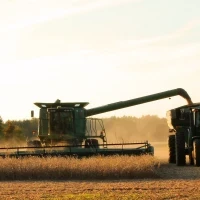 Developer's Note 24 August 2026: WPI recently completed an exercise that updated the codebase for this app and solved some of the discrepancies between our five-year average calculation and USDA's. There are a few lingering cases where early (late) starts (finishes) to the crop cycle resu...

From WPI Consulting
Communicating importance of value-added products

Facing increasing pressure to quantify the value of export promotion efforts to investors, a U.S. industry organization retained WPI to develop a quantitative model that better communicated the importance of exports. The resulting model concluded that value-added meat exports contributed $0.45 cents per bushel to the price of corn, increasing support for that sector’s financial support of WPI’s client. In addition to serving the red meat industry with this type of analysis, WPI has generated similar deliverables for the U.S. soybean and poultry/egg industries.