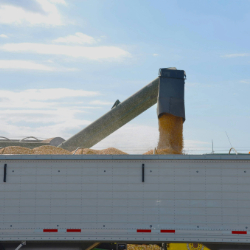
Key Takeaways:
Harvest pressure is fundamentally a timing issue: supply arrives much faster than demand can adjust, creating temporary weakness that can occur across crops and regions. The intensity of that pressure depends less on crop size alone than on how quickly grain moves into the system and how much storage and transportation capacity is available to absorb it. Local cash markets often feel harvest pressure more directly than futures markets, making basis an important indicator of how tight or burdensome nearby supplies have become. Strong end-user demand and efficient market access can insulate some regions from the weakest harvest bids, which is why basis can differ sharply between locations. Seasonal tendencies should be treated...



 Pork packer margins closed out September as positive, marking an improvement in a challenging 2026. According to Sterling Marketing, for the week ending 26 September, pork packer margins were $6.98 per head, which is up from a loss of $0.13 the previous week, more than double the margin of $3.9...
 Wheat Argentina Argentina’s wheat conditions improved following the latest round of rainfall. Around 34 percent of the crop is now at heading or later stages, with the first harvests starting in the north and early yields coming in above historical averages. The area rated Good to Excelle...
 What You Need to Know Today: The G7 agreed to release 100 million barrels of crude oil and fuel reserves over four months, with a substantial diesel release front-loaded into the first 20 days. The announcement initially pushed crude oil lower on Friday, although it later recovered a portion o...