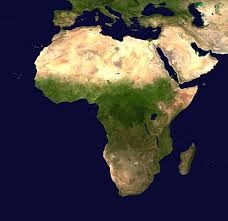
The population in Africa is projected to nearly double from 1.34 billion in 2020 to 2.5 billion by 2050. By contrast, the rest of the world’s population over that same period is expected to increase by less than 10 percent. Over that period, Sub-Saharan Africa will go from 16.7 percent of the world’s population living on 14 percent of the world’s arable land, to 25 percent living on that same share of land. The amount of land could be sufficient but not based on its current low-yield output. Investment is needed and the region currently has low credit availability relative to arable land. This is especially true when compared with Europe, Asia, and Oceania. The FAO does not provide recent data on FDI inflows to Afri...



 There was encouraging news over the weekend: the White House may reject the misguided idea on Capitol Hill to ban U.S. diesel exports. What WPI has noted previously was perhaps best put by a Department of Energy report of 2022, under the Biden administration: Petroleum liquids markets are globa...


 Key Takeaways: Comparative advantage encourages countries to specialize in goods they can produce at a lower opportunity cost and rely on trade for others. Differences in climate, land, infrastructure, and technology help determine where agricultural commodities can be produced most efficientl...
 Mediterranean/Middle East/North Africa/Africa – MEA Region Iran is reported to have completed its rail link from the border with Afghanistan to the Iranian port of Chabahar on the Gulf of Oman — the link is expected to be fully operational in early 2027. This will be Afghanistan&rsq...
 Mexico Trade Deal The Trump Administration is looking for a win before the November midterm elections, now just five weeks away, especially as trade relations with Canada worsen and there is now a truce with China. The U.S. has made it clear to Mexican officials that it wants a deal with Mexico...

From WPI Consulting
Forecasting developments in production agriculture
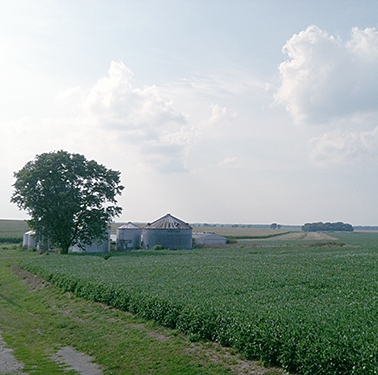
On behalf of a private U.S. agricultural technology provider, WPI’s team generated an econometric model to forecast the movement of concentrated corn production north and west from the traditional U.S. Corn Belt. WPI’s model has subsequently provided quantitative support to a multi-million-dollar investment into short-season corn variety development. WPI’s methodology included a series of interviews with regional grain elevators and seed consultants. Emphasizing outreach and communication with stakeholders who possess intimate sectoral knowledge – on-the-ground insights – is a regular component of WPI’s methodologies, made possible by WPI’s ever-growing network of industry contacts.