


Crop Diversification How much water does corn require, and how much do soybeans need? Experts suggest corn requires 500-800 millimeters and that the crop needs limited water at least three times during the crop season. These periods of hydration need to occur at the time of sowing, within 20-40 days of sowing and within 45-60 days of sowing. Soybeans require about the same amount of water. Paddy, however, requires 900-2,500 millimeters of water during its crop cycle and must be submerged in at least 30-100 millimeters at different times. Water use efficiency (WUE) for paddy is 3.7 per millimeter of water when productivity is 4.5 MMT, whereas WUE for corn is 8 per millimeter of water when productivity is 5 MMT.The government of India (GOI...



 Yesterday, Alberta held a referendum on whether to begin the process toward independence from Canada. With more than one million votes counted as of early Tuesday morning, around 77 percent supported remaining in Canada, and 23 percent voted to start the process of separation, according to unof...
 Mediterranean/Middle East/North Africa/Africa – MEA Region Pakistan’s smaller wheat farmers have been holding protests to complain about the lack of a support price for wheat and the potential expansion of GMO crop production. They also want the reinstatement of PASSCO, the governme...
 What You Need to Know Today: Harvest pressure in the U.S. sent corn and soybeans lower as supplies increased and there were signs USDA’s upward revisions to yields in the October WASDE could be close to right. The conflict between Russia and Ukraine escalated over the weekend, with Ukrai...

From WPI Consulting
Infrastructure investment due diligence
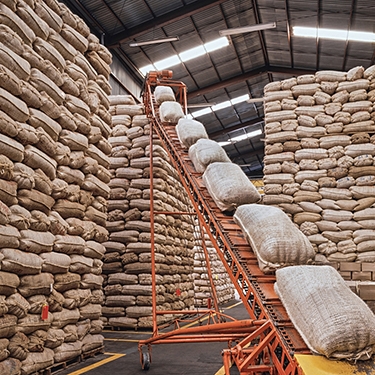
On behalf of a Canadian oilseed processer WPI's team provided market analysis, econometric modeling and financial due diligence in support of a $24 million-dollar investment in a Ukrainian crush plant. Consistent with WPI's findings, local production to supply the plant and the facility's output have expanded exponentially since the investment. WPI has conducted parallel work on behalf of U.S., South American and European clients, both private and public, in the agri-food space.