
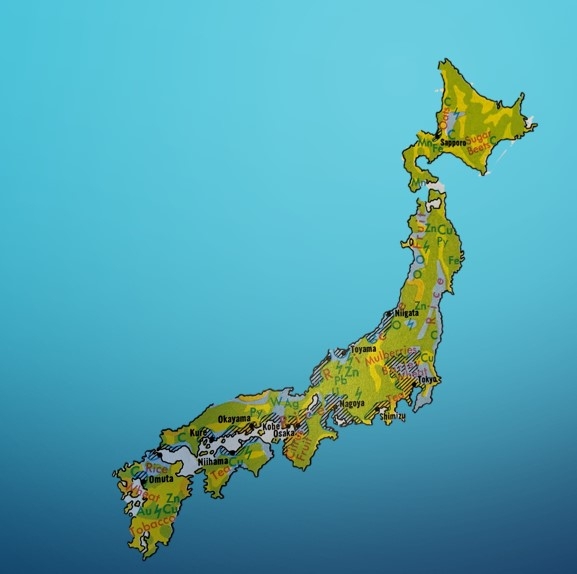
In Japan, rice has been called the essence of culture; it has meant more than just food, though food security is the basis for policy interventions to protect it. Despite the nostalgia and market controls, rice on paddy fields is declining, giving way to more profitable wheat and soybeans that previously grew on terraced land. The government itself wants production to decline further as domestic consumption has fallen. Increasingly, rice is being used as animal feed, which likely would have caused an uproar in the past unless the grains were damaged. There is sympathy in North Dakota where farmers are abandoning traditional wheat production and replacing it with more profitable corn and soybean production. ...



 Key Takeaways: Dry bulk markets remain mixed with Capesize rates turning around from their recent weakness and posting solid gains on improved Chinese demand. Panamax vessels, on the other hand, saw rates decline amid greater tonnage availability in the South Atlantic and falling U.S. Gu...
 Key Takeaways: A student group from the University of Chicago is protesting to bring back onion futures trading. Trading in onion futures was banned in 1958 following a spectacular bout of market manipulation that resulted in a corner of the physical market. The ban on onion futures led t...

From WPI Consulting
Weighing in on strategic realignment

WPI’s team was retained by the governing board of a U.S. industry organization to review a decision, reached by vote, to invest significant assets into the development and management of an export trading company. WPI’s team conducted a formal review of this decision and concluded that the current level of market saturation would limit the benefits of the investment. Based on WPI’s analysis and recommended actions, the board subsequently reversed its decision and undertook a strategic planning effort to identify more impactful investments. On behalf of numerous clients, WPI has not only assisted in identifying strategic paths but also advised their implementation.