World Perspectives
livestock

Livestock Round Up: U.S. and Canada Livestock Inventory

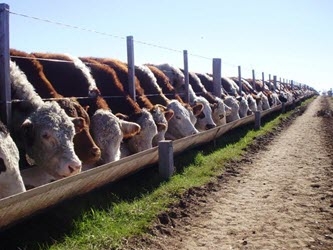
Details of the combined U.S. and Canadian cattle and swine herds were released yesterday. The cattle data is based on the semi-annual inventory as of 1 July; for hogs the U.S. data is based on the quarterly Hogs and Pigs report which is as of the second quarter ending on 1 June and the data for Canada is a semi-annual report as of 1 July. Below is a look at both.    All cattle and calves in both countries as of 1 July totaled 111 million head, 98 percent of the inventory on 1 July 2021. Canada’s herd has declined more sharply in the past year than the U.S. which has been in steady contraction since 2019. As of 1 July, Canada had an on-feed inventory of 985,992 head in Alberta and Saskatchewan, which comprise about 70...

Related Articles
feed-grains soy-oilseeds wheat

Market Commentary: Yield, Acreage Increases Sink Corn, Soybeans

The CBOT came under heavy selling pressure following the January WASDE as USDA unexpectedly increased U.S. corn acreage and yields. The USDA also added area to the soybean harvested and made a bearish cut to U.S. wheat demand, moves which sent all of the major commodity futures markets sharply...

India Holds Out; USMCA Friction; AI and Ag

India Holds Out The most disappointed of U.S. trading partners has to be India. It has long held hope that it would succeed China as the largest foreign supplier to the American market. It is a natural foil to China, which has been politely designated by Washington as a strategic competitor and...

energy

Venezuela Oil Situation and Oil Price Impacts

The world woke up on Jan. 3 to news of the arrest of Nicolas Maduro, the self-proclaimed president of Venezuela. Few expected this move from the U.S. administration, but in hindsight it may not have been surprising. The Biden administration had placed a $25 million bounty on Maduro through the...

feed-grains soy-oilseeds wheat

Market Commentary: Yield, Acreage Increases Sink Corn, Soybeans

The CBOT came under heavy selling pressure following the January WASDE as USDA unexpectedly increased U.S. corn acreage and yields. The USDA also added area to the soybean harvested and made a bearish cut to U.S. wheat demand, moves which sent all of the major commodity futures markets sharply...

India Holds Out; USMCA Friction; AI and Ag

India Holds Out The most disappointed of U.S. trading partners has to be India. It has long held hope that it would succeed China as the largest foreign supplier to the American market. It is a natural foil to China, which has been politely designated by Washington as a strategic competitor and...

energy

Venezuela Oil Situation and Oil Price Impacts

The world woke up on Jan. 3 to news of the arrest of Nicolas Maduro, the self-proclaimed president of Venezuela. Few expected this move from the U.S. administration, but in hindsight it may not have been surprising. The Biden administration had placed a $25 million bounty on Maduro through the...

feed-grains

WASDE Corn - Jan 2026

USDA’s Jan estimate for 2025/26 U.S. corn is for larger production and higher feed residual usage to result in greater ending stocks: Corn production is estimated at 17.0 billion bushels, up 269 million on a 0.5-bushel increase in yield to 186.5 bushels per acre and a 1.3-million acre ris...

Image
From WPI Consulting

Communicating importance of value-added products

Facing increasing pressure to quantify the value of export promotion efforts to investors, a U.S. industry organization retained WPI to develop a quantitative model that better communicated the importance of exports. The resulting model concluded that value-added meat exports contributed $0.45 cents per bushel to the price of corn, increasing support for that sector’s financial support of WPI’s client. In addition to serving the red meat industry with this type of analysis, WPI has generated similar deliverables for the U.S. soybean and poultry/egg industries.

Search World Perspectives

Sign In to World Perspectives

Don’t have an account yet? Sign Up