
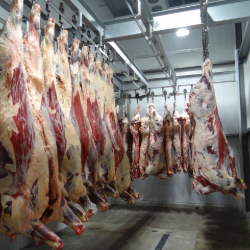
During the State of the Union (SOTU) address, President Trump made several claims about food prices, citing reductions in costs to consumers. Food inflation is a major issue for voters, and the President is hyper-focused on beef prices in particular prior to the 2026 mid-term elections. The final CPI numbers are in for 2025, and food prices were up 0.7 percent for the month, the largest monthly increase since October 2022. His claims on beef prices were accurate but need to be put in context. Since 2023, wholesale proteins have been on a rollercoaster. For the year, beef was up 13.1 percent, up from 5.8 percent in 2024. That compares to pork at 5.7 percent, down from 11.8 percent, and poultry is 3.1 percent, up from 0 percent in 2024. Beef...



 What You Need to Know Today: Corn, wheat, and the soy complex all formed new contract or at least rally highs to close what has become one of the most uniformly bullish weeks in CBOT history. Escalations in the fighting between Russia and Ukraine and attacks on civilian merchant vessels show n...

 The Federal Reserve Board holds an annual meeting in Jackson Hole, Wyoming, each year about this time, and this year’s meeting is now. It’s always a “must-watch” event, but this year, amidst persistent inflation and with a new Fed chairman, Kevin Warsh, it drew additiona...

 You cannot escape the vortex of opinions about water scarcity in the Western United States, especially in the drought-stricken Colorado River Basin. Agriculture is the villain in many of these editorials. Agriculture uses too much water, so it should use less, is the refrain. We all wish it was...

From WPI Consulting
Communicating importance of value-added products

Facing increasing pressure to quantify the value of export promotion efforts to investors, a U.S. industry organization retained WPI to develop a quantitative model that better communicated the importance of exports. The resulting model concluded that value-added meat exports contributed $0.45 cents per bushel to the price of corn, increasing support for that sector’s financial support of WPI’s client. In addition to serving the red meat industry with this type of analysis, WPI has generated similar deliverables for the U.S. soybean and poultry/egg industries.