


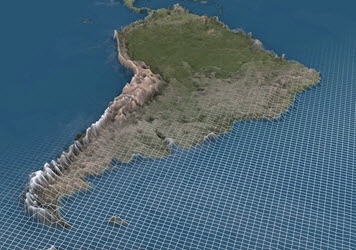
Soybeans Brazil The soybean market remains slow. With China very quiet and Brazil currently cheaper than U.S. Gulf, basis continues to fall. The only movement has been for spot positions with the market turning into a carry structure for January onward. Last week there were rumors of a trade at 114 for January and 105 for a January/February straddle, although this has not been confirmed. There is still elevation capacity for the nearby positions at ports. The harvest is just beginning in Brazil (approximately 5 percent complete at this time), and soybeans will soon start flowing to ports. Exporters need to put some sales in the books to rotate the ports, but demand is not showing up. Origination basis is above present levels, and farmers...


 What You Need to Know Today: Russia rejected calls for a ceasefire in the Black Sea, including a proposal to halt attacks on civilian shipping that could help restore grain flows from Ukrainian ports. Tyson Foods announced plans to permanently close its Joslin, Illinois, beef processing facili...

 The big news in the cattle markets yesterday was Tyson Foods’ move to close two more beef plants. One of them, the Joslin, Illinois, plant was shuttered immediately after the announcement. The other, in Eagle Mountain, Utah, is a case-ready plant that does not slaughter cattle. Tyson also...

 The Bureau of Labor Statistics (BLS) released the Consumer Price Index (CPI) on Wednesday. In July, the CPI rose 0.1 percent, seasonally adjusted, and rose 3.4 percent over the last 12 months, not seasonally adjusted. The index for all items less food and energy, or the “core” infla...

Illuminating the value of technical research

On behalf of a commodity producer organization, WPI evaluated the outputs from a project that featured a $5 million investment into technical research over multiple years. WPI’s team captured the results of this extensive effort and synthesized them for presentation to the organization’s governing board; among the findings uncovered and presented for the first time was the development of genomic traits proven, via rigorous testing, to provide crop yield advantages of 50 percent or more to U.S. farmers in times of drought. Capturing measurable results from long-term efforts can be challenging. Educating clients on the dynamics of success measurement when quantifiable results are not readily available requires deep client-consultant collaboration and an ability to consider both near- and long-term client aspirations with market/policy dynamics – attributes that WPI brings to every consulting engagement.