


Logistical Problems in Argentina In past years, Argentina has been well known for its excellent port logistics. Normally there is almost no waiting time at ports because of the huge loading capacity, and good roads and railways that feed the terminals. However, in the past few months several problems have created significant shipment delays. These include:Draft Reduction: A draft reduction was the result of a summer drought that forced vessels to load fewer quantities in Upriver ports. Panamaxes had to increase their intake quantities in deeper ports like Bahia Blanca, Necochea or those in Brazil. This was not a big issue, but it has had an economic impact since grains in these ports are normally more expensive than they are in Upriver...



 Key Takeaways: President Trump announced $8 billion in additional agricultural assistance through the Harvest Fuel Relief Program, as USDA projects farm fuel and oil expenses will increase 28.8 percent in 2026. The package follows $12 billion in earlier relief, while government farm payments w...

 Key Takeaways: A student group from the University of Chicago is protesting to bring back onion futures trading. Trading in onion futures was banned in 1958 following a spectacular bout of market manipulation that resulted in a corner of the physical market. The ban on onion futures led t...

 Beef packer margins deteriorated to $141/head last week, down $55 from the prior week as fed cattle prices strengthened while the Choice cutout remained nearly unchanged. The cutout held near $373/cwt while fed cattle prices climbed $4/cwt to $224/cwt, narrowing processor profits. Despite the d...

From WPI Consulting
Infrastructure investment due diligence
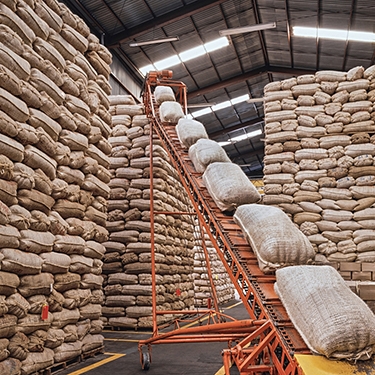
On behalf of a Canadian oilseed processer WPI's team provided market analysis, econometric modeling and financial due diligence in support of a $24 million-dollar investment in a Ukrainian crush plant. Consistent with WPI's findings, local production to supply the plant and the facility's output have expanded exponentially since the investment. WPI has conducted parallel work on behalf of U.S., South American and European clients, both private and public, in the agri-food space.