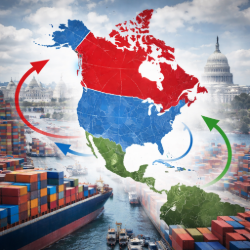
Fuzzy Math Among President Trump’s various assertions in last night’s State of the Union address was that tariffs would someday replace the income tax, but that is a mathematical impossibility. The value of imported goods is around $3 trillion, and the income tax generates nearly $5 trillion. Applying the necessary 166 percent tariff would inherently reduce imports and thus cause a shortfall in government revenue. Tariffs rose 186 percent in 2025, and the resulting revenues increased from $170 billion to about $270 billion, but imports fell from the country where tariffs were applied most heavily—China. And the tariff rate applied to China was 23 percent. It would require a 165 percent tariff on $3 trillion worth of import...



 What You Need to Know Today: The G7 agreed to release 100 million barrels of crude oil and fuel reserves over four months, with a substantial diesel release front-loaded into the first 20 days. The announcement initially pushed crude oil lower on Friday, although it later recovered a portion o...

 In a recent social media post, R-CALF unveiled its latest cattle market plan: “contracts that bind producers before establishing a base price, then tie that price to future negotiated cash transactions, should be prohibited.” That proposal aligns with recent legislation by Represent...
 Key Takeaways: The recent pearl-clutching from parts of the beef industry regarding the loss of the daily Kansas fed cattle negotiated trade pricing report is overwrought and ignores the fact that the direction was readily apparent. The shift away from negotiated trade has been well docu...

From WPI Consulting
Accountability and a comprehensive approach to export programming

WPI’s team helped construct a strategic approach to develop, implement, and track promotional activities in 8 key regions across the globe for an agricultural export association. With continued progress measurement and strategic advisory services from WPI, the association has seen its ROI from investments in promotional programming increase by 44 percent over the past 5 years. Not only does this type of holistic approach to organizational strategy provide measurable results to track and analyze, it fosters top-down and bottom-up organizational accountability.