
Wrestling with Government Burden President Obama joked about regulating milk spills, but the anti-regulatory burden is an intensely emotional issue. This is Red Tape Awareness Week in Canada, where the conservative Harper government has issued a report calling for a "one-for-one" requirement that would eliminate one old rule for each new one imposed on agriculture. The effort is also to work with U.S. counterparts to streamline pesticide regulation. But U.S. regulators are dogged by lawsuits to be increasingly burdensome, thus the latest effort to mandate more emissions reporting by concentrated animal feeding operations. The courts sided with industry against a California state law on slaughter plants, though U.S. House Agriculture Comm...



 What You Need to Know Today: Declining crop conditions ratings and shaky results from the Pro Farmer crop tour sent grains sharply higher on Tuesday. The Pro Farmer tour in Ohio pegged the state yield at 180.18 BPA, about 5.5 BPA below the tour’s 2025 estimate. Similarly, the Pro Farmer...

 Based on a Depression-era statute, President Trump imposed 50 percent tariffs on $20 billion of exports to the U.S., or about 5.2 percent of the $383 billion worth of goods the U.S. imported from Canada in 2025, according to U.S. Census Bureau data. Of that total, about $39.3 billion was agricu...
 Key Takeaways: Brazil’s growing role in global agriculture is accompanied by a major vulnerability: the country imports approximately 88 percent of its fertilizer needs. High natural gas costs and development challenges have limited domestic nitrogen and potash production despite Brazil&...

From WPI Consulting
Forecasting developments in production agriculture
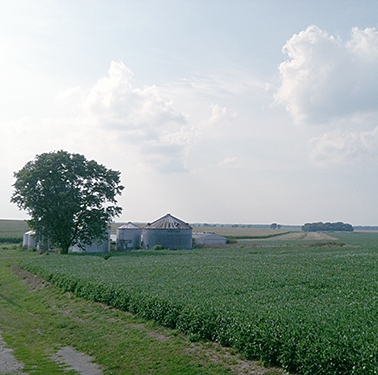
On behalf of a private U.S. agricultural technology provider, WPI’s team generated an econometric model to forecast the movement of concentrated corn production north and west from the traditional U.S. Corn Belt. WPI’s model has subsequently provided quantitative support to a multi-million-dollar investment into short-season corn variety development. WPI’s methodology included a series of interviews with regional grain elevators and seed consultants. Emphasizing outreach and communication with stakeholders who possess intimate sectoral knowledge – on-the-ground insights – is a regular component of WPI’s methodologies, made possible by WPI’s ever-growing network of industry contacts.