
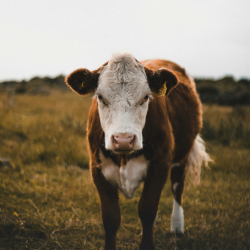
New World Screwworm Another day, another case of New World Screwworm. USDA has reported nine cases of New World Screwworm (NWS) in the U.S. Of the nine reported cases, eight are located across four counties in Texas—Edwards, Gillespie, La Salle, and Zavala. Of the eight cases in Texas, six have been in cattle and two have been in goats. One case has been reported in Lea County, New Mexico, in a dog that contracted the disease in Mexico. Meanwhile, 21 Senate Democrats, led by Senator Amy Klobuchar (D-Minnesota), have signed a letter to USDA Secretary Rollins urging “further and immediate” action by USDA. The letter states, “Due to the scale of the animal health threat that New World Screwworm poses to the United State...



 What You Need to Know Today: Headlines emerging from negotiations between President Trump and President Xi were relatively limited, with a more substantive announcement expected Monday. U.S. Trade Representative Jamieson Greer indicated that additional details related to agricultural trade cou...
 The heat of summer is now transitioning into more moderate temperatures, and the next two months have the busiest marketing periods of the year for replacement cattle. Weather always influences the replacement cattle market, and the primary grain belt in the Southern Plains, where many cattle a...


 Key Takeaways: Diesel accounts for about 64 percent of U.S. farm fuel spending. For farmers, the pressing question is what a higher price adds to each field operation. Iowa farm diesel averaged $5.50/gallon in September, compared with the $2.89/gallon Iowa State assumed for its February machin...

From WPI Consulting
Infrastructure investment due diligence
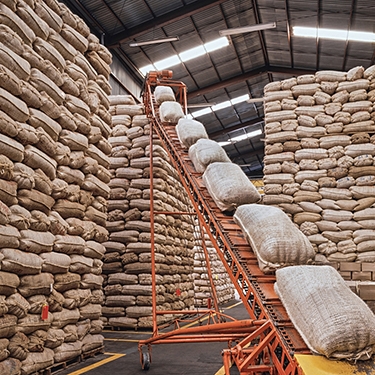
On behalf of a Canadian oilseed processer WPI's team provided market analysis, econometric modeling and financial due diligence in support of a $24 million-dollar investment in a Ukrainian crush plant. Consistent with WPI's findings, local production to supply the plant and the facility's output have expanded exponentially since the investment. WPI has conducted parallel work on behalf of U.S., South American and European clients, both private and public, in the agri-food space.