
While total available 2013/14 U.S. soybean supplies are about 225 million bushels greater than the 2012/13 total, all of the additional supplies are being absorbed by a commensurate increase in demand.It has been no surprise that 2013/14 U.S. soybean supplies would become very tight. Most market analysts were already predicting that this would be the case even before the 2013 soybean harvest began. Heavy demand for the previous year's soybean crop, which had been cut by the severe drought during the summer of 2012, drew ending 2012/13 U.S. ending soybean stocks down to 141 million bushels. This was barely enough to cover the transition from that crop year to the current one. There was no cushion in the 2012/13 soybean carryout to ease the p...



 What You Need to Know Today: U.S. weather is getting more attention this week as conditions vary greatly across the western, central, and eastern corn belts, with the different regions battling dryness and too much rain simultaneously. The ProFarmer Crop Tour began today in Indiana and Nebrask...

 Unlike the 2022 fertilizer shock, today’s disruption is rooted less in rerouted trade flows and more in damaged production capacity, raw material constraints and uncertain recovery timelines. That makes this a longer-duration risk for U.S. agricultural producers and retailers who must sec...

From WPI Consulting
Forecasting developments in production agriculture
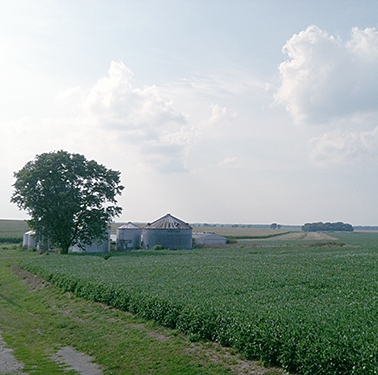
On behalf of a private U.S. agricultural technology provider, WPI’s team generated an econometric model to forecast the movement of concentrated corn production north and west from the traditional U.S. Corn Belt. WPI’s model has subsequently provided quantitative support to a multi-million-dollar investment into short-season corn variety development. WPI’s methodology included a series of interviews with regional grain elevators and seed consultants. Emphasizing outreach and communication with stakeholders who possess intimate sectoral knowledge – on-the-ground insights – is a regular component of WPI’s methodologies, made possible by WPI’s ever-growing network of industry contacts.