


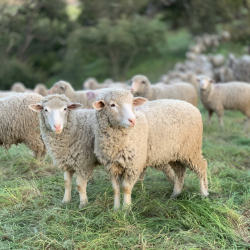
Executive Summary Sheep and goats represent one of the largest livestock protein systems in the world, with an estimated 2.3 billion head globally; however, they remain almost entirely absent from U.S. agricultural policy, trade strategy, and market forecasting. The U.S. small ruminant herd, at roughly 7.5 million head, accounts for less than 0.3 percent of the global population and has continued to contract even as domestic demand for lamb and goat meat rises. The result is a structural and widening import dependency: the U.S. has imported an average of $1.47 billion annually in lamb, mutton, and goat meat over the past five years, with Australia and New Zealand supplying the overwhelming majority of that volume. For traders, investors, an...



 Key Takeaways: USDA data access is equal; the ability to use it is not. Larger operations can afford experts who turn public reports into business decisions. Analytical capacity is the true advantage. Forecasts matter only when converted into profit, purchasing, and risk-management decisions...
 Russian Grain Markets: 7–11 September 2026 During the first week of September, the Russian grain market remained volatile but predominantly bearish. Among the few commodities that continued to show a bullish trend was rye, which is in short supply this year and has few offers available. I...

From WPI Consulting
Communicating importance of value-added products

Facing increasing pressure to quantify the value of export promotion efforts to investors, a U.S. industry organization retained WPI to develop a quantitative model that better communicated the importance of exports. The resulting model concluded that value-added meat exports contributed $0.45 cents per bushel to the price of corn, increasing support for that sector’s financial support of WPI’s client. In addition to serving the red meat industry with this type of analysis, WPI has generated similar deliverables for the U.S. soybean and poultry/egg industries.