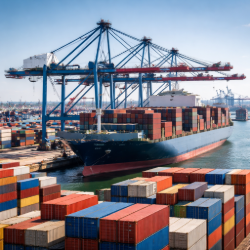
Last Thursday, the Supreme Court of the United States upheld a lower court ruling that the tariffs imposed under the International Emergency Economic Powers Act (IEEPA) were “contrary to the law.” However, as President Trump noted, the opinion remained silent on the issue of rebating those tariffs. USTR Jameson Greer stated that refunds are up to the court, which has not provided any guidance, and when Treasury Secretary Scott Bessent was asked about refunds, he had no comment. This is still being worked out and will take some time. Expect much confusion and chaos as that gets straightened out. U.S. Customs and Border Protection (CBP) has notified importers that it will no longer collect import tariffs under IEEPA beginning 12:0...



 What You Need to Know Today: The G7 agreed to release 100 million barrels of crude oil and fuel reserves over four months, with a substantial diesel release front-loaded into the first 20 days. The announcement initially pushed crude oil lower on Friday, although it later recovered a portion o...

 In a recent social media post, R-CALF unveiled its latest cattle market plan: “contracts that bind producers before establishing a base price, then tie that price to future negotiated cash transactions, should be prohibited.” That proposal aligns with recent legislation by Represent...
 Key Takeaways: The recent pearl-clutching from parts of the beef industry regarding the loss of the daily Kansas fed cattle negotiated trade pricing report is overwrought and ignores the fact that the direction was readily apparent. The shift away from negotiated trade has been well docu...

From WPI Consulting
Infrastructure investment due diligence
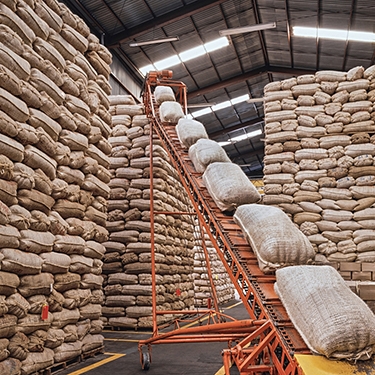
On behalf of a Canadian oilseed processer WPI's team provided market analysis, econometric modeling and financial due diligence in support of a $24 million-dollar investment in a Ukrainian crush plant. Consistent with WPI's findings, local production to supply the plant and the facility's output have expanded exponentially since the investment. WPI has conducted parallel work on behalf of U.S., South American and European clients, both private and public, in the agri-food space.