Key Takeaways:
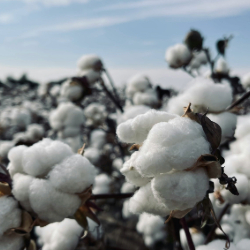
Global and U.S. cotton demand has struggled since the post-COVID-19 pandemic surge, which has left cotton prices drifting lower in the U.S. The war in Iran and the closure of the Strait of Hormuz, along with their impact on global energy markets, could boost cotton demand by making synthetic alternatives more expensive, although the magnitude remains uncertain. Additionally, the conflict in Iran and the Russia-Ukraine war are boosting demand for cotton linters, which are used in munitions as nitrocellulose or “guncotton.” Unfortunately for cotton producers, guncotton demand is too small relative to the overall market to move the needle on cotton use. Overall, global cotton demand is set to expand in 2026/27...



 Markets are caught between reasons to keep selling and reasons to take another look. Fund liquidation and renewed peace talks are pressuring grains, while fresh export business and some diesel relief offer encouragement. Corn recovered nearly 10 cents from its low to finish higher, while soybea...
 Key Takeaways: President Trump announced $8 billion in additional agricultural assistance through the Harvest Fuel Relief Program, as USDA projects farm fuel and oil expenses will increase 28.8 percent in 2026. The package follows $12 billion in earlier relief, while government farm payments w...
 Key Takeaways: A student group from the University of Chicago is protesting to bring back onion futures trading. Trading in onion futures was banned in 1958 following a spectacular bout of market manipulation that resulted in a corner of the physical market. The ban on onion futures led t...