
As WPI reported on 17 July, the recently passed budget reconciliation bill in the House Budget Committee includes $12 billion in emergency farm assistance. This would be the seventh of the past nine years with ad hoc farm payments (FY2018, FY2019, FY2020, FY2022, FY2023, FY2024, and potentially FY2026). Ohio State University professor Carl Zulauf has published a paper on the farm safety net, arguing that over the last 50 years, the crop market has not covered the cost of producing the eight program crops for which USDA computes a cost of production. However, these losses have more than been covered by farm safety-net payments, especially when accounting for ad hoc payments. Thus, the farm safety net has become a profit center rather than a...



 Markets are caught between reasons to keep selling and reasons to take another look. Fund liquidation and renewed peace talks are pressuring grains, while fresh export business and some diesel relief offer encouragement. Corn recovered nearly 10 cents from its low to finish higher, while soybea...

 Key Takeaways: President Trump announced $8 billion in additional agricultural assistance through the Harvest Fuel Relief Program, as USDA projects farm fuel and oil expenses will increase 28.8 percent in 2026. The package follows $12 billion in earlier relief, while government farm payments w...

 Key Takeaways: A student group from the University of Chicago is protesting to bring back onion futures trading. Trading in onion futures was banned in 1958 following a spectacular bout of market manipulation that resulted in a corner of the physical market. The ban on onion futures led t...

From WPI Consulting
Forecasting developments in production agriculture
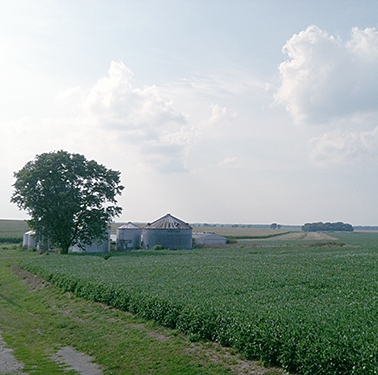
On behalf of a private U.S. agricultural technology provider, WPI’s team generated an econometric model to forecast the movement of concentrated corn production north and west from the traditional U.S. Corn Belt. WPI’s model has subsequently provided quantitative support to a multi-million-dollar investment into short-season corn variety development. WPI’s methodology included a series of interviews with regional grain elevators and seed consultants. Emphasizing outreach and communication with stakeholders who possess intimate sectoral knowledge – on-the-ground insights – is a regular component of WPI’s methodologies, made possible by WPI’s ever-growing network of industry contacts.