Trade Somersaults Analysts are now writing that U.S. trade policy is destabilizing the world economy, though Trump supporters would say that global trade policy was destabilizing the U.S. economy. However, there are rapid changes occurring in global trade policy that do not always involve Donald Trump. Walk the Talk: Activists in Europe are demanding that future trade negotiations include binding control mechanisms on environmental commitments. Some in the EU want to penalize the U.S. for President Trump’s withdrawal from the Paris agreement, but a new analysis by the Pembina Institute and the environmental policy firm Energy Innovation indicates that despite Canada’s commitments under the transatlantic CETA agreement and Pari...



 What You Need to Know Today: Russia rejected calls for a ceasefire in the Black Sea, including a proposal to halt attacks on civilian shipping that could help restore grain flows from Ukrainian ports. Tyson Foods announced plans to permanently close its Joslin, Illinois, beef processing facili...

 The big news in the cattle markets yesterday was Tyson Foods’ move to close two more beef plants. One of them, the Joslin, Illinois, plant was shuttered immediately after the announcement. The other, in Eagle Mountain, Utah, is a case-ready plant that does not slaughter cattle. Tyson also...

 The Bureau of Labor Statistics (BLS) released the Consumer Price Index (CPI) on Wednesday. In July, the CPI rose 0.1 percent, seasonally adjusted, and rose 3.4 percent over the last 12 months, not seasonally adjusted. The index for all items less food and energy, or the “core” infla...

From WPI Consulting
Infrastructure investment due diligence
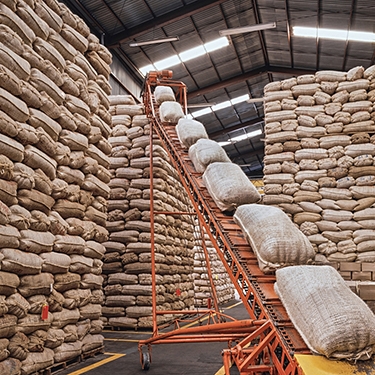
On behalf of a Canadian oilseed processer WPI's team provided market analysis, econometric modeling and financial due diligence in support of a $24 million-dollar investment in a Ukrainian crush plant. Consistent with WPI's findings, local production to supply the plant and the facility's output have expanded exponentially since the investment. WPI has conducted parallel work on behalf of U.S., South American and European clients, both private and public, in the agri-food space.