

Some producers will choose to spend less on crop inputs when profits are projected to be slim or none. That is the case as we head in to the 2014 planting season.If U.S. farmers reduce corn acres in 2014, they will increase soybean acres. We believe this will happen as a result of current price relationships and also because soybean input costs are far less than corn input costs. Direct costs for soybeans can be as much as $200 per acre less than corn. Some producers will choose to spend less on crop inputs when profits are projected to be slim or none. That is the case as we head in to the 2014 planting season. The table below is our first glimpse at what the U.S. soybean balance sheet might look like in MY 2014/15:Here are the assumptions...



 What You Need to Know Today: Commodities were mostly lower across the board today after yesterday’s Federal Reserve meeting hinted at a potential interest rate hike later in 2026. The dollar index reached its highest level in over a year, and a strong dollar makes U.S. agricultural expor...
 Tomorrow is the Juneteenth federal holiday, and the USDA, along with the rest of the federal government and the CME, will be closed, so the monthly Cattle on Feed report was released a day early. The total number of cattle on feed in feedlots with 1,000 head or more capacity on 1 June amounted...

From WPI Consulting
Infrastructure investment due diligence
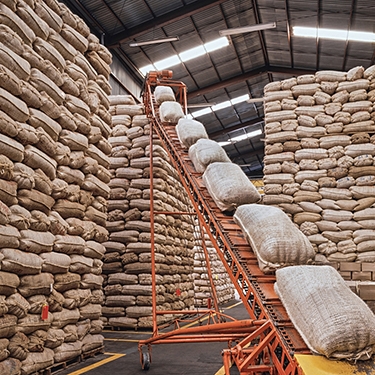
On behalf of a Canadian oilseed processer WPI's team provided market analysis, econometric modeling and financial due diligence in support of a $24 million-dollar investment in a Ukrainian crush plant. Consistent with WPI's findings, local production to supply the plant and the facility's output have expanded exponentially since the investment. WPI has conducted parallel work on behalf of U.S., South American and European clients, both private and public, in the agri-food space.