
Israel is not the agricultural export powerhouse like Ukraine, but it is a supplier of high quality and high value fruits and vegetables. The country is 95 percent self-sufficient in food despite occupying semi-arid desert land. Much of this was achieved through intense effort at land improvement and irrigation. The latter focuses on low evaporation/high absorption techniques. Ukraine’s agricultural output has been dented by Russian mines and bombardment, the destruction of the Kakhovka dam, and wrecking the export infrastructure. For Israel, the larger challenge may be farm labor. The mobilization of reserves and inability to use Palestinian day workers may put parts of the farming sector in caretaking mode. The West Bank has a simi...



 Mediterranean/Middle East/North Africa/Africa – MEA Region Iran is reported to have completed its rail link from the border with Afghanistan to the Iranian port of Chabahar on the Gulf of Oman — the link is expected to be fully operational in early 2027. This will be Afghanistan&rsq...
 WPI Grain Prices and Freight Rate App Note: you can also visit the app directly by clicking here. Supplemental Information The section below offers a concise view of the options available in the current version of the WPI FOB Price and Freight Rate app, along with a short “How To”...

From WPI Consulting
Forecasting developments in production agriculture
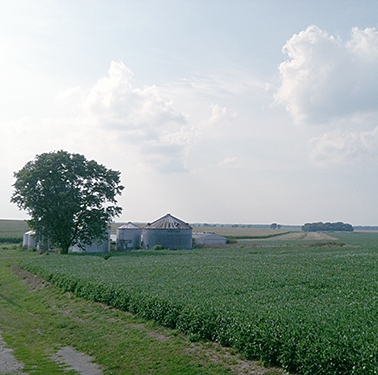
On behalf of a private U.S. agricultural technology provider, WPI’s team generated an econometric model to forecast the movement of concentrated corn production north and west from the traditional U.S. Corn Belt. WPI’s model has subsequently provided quantitative support to a multi-million-dollar investment into short-season corn variety development. WPI’s methodology included a series of interviews with regional grain elevators and seed consultants. Emphasizing outreach and communication with stakeholders who possess intimate sectoral knowledge – on-the-ground insights – is a regular component of WPI’s methodologies, made possible by WPI’s ever-growing network of industry contacts.