

President Joe Biden is “bad talking” about the food industry, accusing it of greed for raising prices. While his focus was on “chips” and shrinkflation, he could also have talked about his favorite food, ice cream. After all, his generation – those over age 75, are the second largest cohort for eating the frozen desert only barely being out-eaten by children. Shrinkflation in ice cream is called over-run, which simply means adding air to reduce the product’s density of expensive milk fat. For many people, ice cream is an essential non-essential. It is high demand comfort food, as proven by ice cream hogging nearly a full half-aisle in the average grocery store. As a “luxury” product in...



 Key Takeaways: Demand and capacity decide where milk growth lands. Italian cheese is up 4.2 percent in 2026, and milk output is growing fastest in Kansas, South Dakota and Texas, where the new plants are located. Price spreads decide where the marginal milk goes. The Class IV premium over Clas...


 Markets are caught between reasons to keep selling and reasons to take another look. Fund liquidation and renewed peace talks are pressuring grains, while fresh export business and some diesel relief offer encouragement. Corn recovered nearly 10 cents from its low to finish higher, while soybea...

 Key Takeaways: President Trump announced $8 billion in additional agricultural assistance through the Harvest Fuel Relief Program, as USDA projects farm fuel and oil expenses will increase 28.8 percent in 2026. The package follows $12 billion in earlier relief, while government farm payments w...

From WPI Consulting
Infrastructure investment due diligence
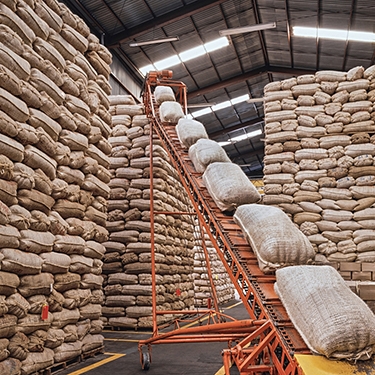
On behalf of a Canadian oilseed processer WPI's team provided market analysis, econometric modeling and financial due diligence in support of a $24 million-dollar investment in a Ukrainian crush plant. Consistent with WPI's findings, local production to supply the plant and the facility's output have expanded exponentially since the investment. WPI has conducted parallel work on behalf of U.S., South American and European clients, both private and public, in the agri-food space.