
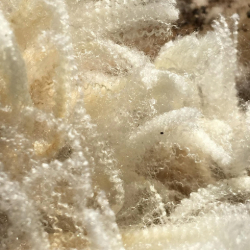
Wool is one of the most misunderstood U.S. agricultural commodities. Fine wool in the 17–21 micron range commands premium prices in luxury apparel, technical outdoor gear, and high-end knitwear, while coarser wool is gaining support as building codes and standards shift toward natural-fiber insulation. Yet the U.S. captures little of wool’s modern value beyond raw production. The issue is not production volume. At roughly 22.5 million pounds and $32 million in annual raw production value, U.S. wool has never been a large commodity. The issue is value capture: most value-added processing (scouring, grading, combing, spinning, weaving, and finishing) occurs overseas, leaving American producers at the lowest rung of the chain. The...


 What You Need to Know Today: USDA cut the 2026 corn yield forecast by 1.6 BPA to 179.6, shaving 141 Mbu off the crop. Corn ending stocks were cut by 91 Mbu to a level that pushed the ending stocks-to-use (ESU) ratio to 10.8 percent. Conversely, USDA raised the soybean yield forecast 0.2 BPA to...

 Key Takeaways: Expanding U.S. soybean crushing capacity is strengthening domestic demand, driven largely by growing soyoil consumption from the renewable diesel and biofuels industries. Despite increased domestic processing, substantial quantities of U.S. soybeans are expected to remain availa...

From WPI Consulting
Communicating importance of value-added products

Facing increasing pressure to quantify the value of export promotion efforts to investors, a U.S. industry organization retained WPI to develop a quantitative model that better communicated the importance of exports. The resulting model concluded that value-added meat exports contributed $0.45 cents per bushel to the price of corn, increasing support for that sector’s financial support of WPI’s client. In addition to serving the red meat industry with this type of analysis, WPI has generated similar deliverables for the U.S. soybean and poultry/egg industries.