


No one can say that for agricultural derivative markets, the year of 2011 lacked for excitement and drama -- some of which was quite painful. Some of the excitement came from the structural changes either adopted or proposed by the CFTC to meet the requirements of the Dodd-Frank financial reform legislation. Some of the drama stemmed from external factors that seemed on occasion to wield so much influence over short-term market prices direction. These included the never-ending eurozone sovereign debt crisis and the U.S. Federal Reserve Bank's accommodative monetary policies. They also included rising tensions with Iran with potential ramifications for energy costs. The wrong kind of excitement was generated by the collapse of MF Global, a...


 What You Need to Know Today: Declining crop conditions ratings and shaky results from the Pro Farmer crop tour sent grains sharply higher on Tuesday. The Pro Farmer tour in Ohio pegged the state yield at 180.18 BPA, about 5.5 BPA below the tour’s 2025 estimate. Similarly, the Pro Farmer...
 Mediterranean/Middle East/North Africa/Africa – MEA Region Egypt is the largest importer of Brazilian maize in the first six months of 2026. Egypt imported about 28.4 percent of maize exports, or about 1.7 million MT. Iran was the third-largest importer at 14.5 percent, or 900,000 MT, fol...

 Based on a Depression-era statute, President Trump imposed 50 percent tariffs on $20 billion of exports to the U.S., or about 5.2 percent of the $383 billion worth of goods the U.S. imported from Canada in 2025, according to U.S. Census Bureau data. Of that total, about $39.3 billion was agricu...

From WPI Consulting
Forecasting developments in production agriculture
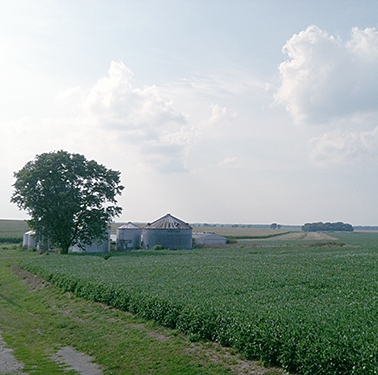
On behalf of a private U.S. agricultural technology provider, WPI’s team generated an econometric model to forecast the movement of concentrated corn production north and west from the traditional U.S. Corn Belt. WPI’s model has subsequently provided quantitative support to a multi-million-dollar investment into short-season corn variety development. WPI’s methodology included a series of interviews with regional grain elevators and seed consultants. Emphasizing outreach and communication with stakeholders who possess intimate sectoral knowledge – on-the-ground insights – is a regular component of WPI’s methodologies, made possible by WPI’s ever-growing network of industry contacts.