


It goes without saying that USDA's monthly WASDE is a strong common thread that grain and soy markets face. Death and taxes may be inevitable, but so too are the WASDEs. Each month markets anticipate, often with considerable caution, USDA's latest forecasts of U.S. and world crop production and supply/demand balances. The tighter supply/demand balances appear to be, the greater the degree of caution. On the days preceding the release of each WASDE, markets trade their expectations of what it will show. Immediately after each WASDE release, markets trade on the accuracy of pre-release expectations and particularly on any big surprises it might contain.Production of wheat, corn and oilseeds in the Southern Hemisphere has gradually but inevi...


 What You Need to Know Today: Declining crop conditions ratings and shaky results from the Pro Farmer crop tour sent grains sharply higher on Tuesday. The Pro Farmer tour in Ohio pegged the state yield at 180.18 BPA, about 5.5 BPA below the tour’s 2025 estimate. Similarly, the Pro Farmer...
 Mediterranean/Middle East/North Africa/Africa – MEA Region Egypt is the largest importer of Brazilian maize in the first six months of 2026. Egypt imported about 28.4 percent of maize exports, or about 1.7 million MT. Iran was the third-largest importer at 14.5 percent, or 900,000 MT, fol...

 Based on a Depression-era statute, President Trump imposed 50 percent tariffs on $20 billion of exports to the U.S., or about 5.2 percent of the $383 billion worth of goods the U.S. imported from Canada in 2025, according to U.S. Census Bureau data. Of that total, about $39.3 billion was agricu...

From WPI Consulting
Infrastructure investment due diligence
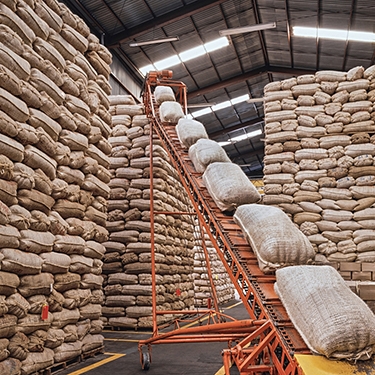
On behalf of a Canadian oilseed processer WPI's team provided market analysis, econometric modeling and financial due diligence in support of a $24 million-dollar investment in a Ukrainian crush plant. Consistent with WPI's findings, local production to supply the plant and the facility's output have expanded exponentially since the investment. WPI has conducted parallel work on behalf of U.S., South American and European clients, both private and public, in the agri-food space.