
U.S. tariffs are reordering world trade and may further impact the nation’s agricultural exports. While soybean exports to China are stalled as that nation redirects all of its purchases to South America, that has been a political position that ignores the lower cost of U.S. soybeans. However, the application of tariffs is also rearranging the economics of trade. Washington accepted Brazil’s WTO challenge of its new tariff regime, and it will claim national security as their rationale. The new tariffs will remain regardless of how the WTO rules on the national security claim. Jurists in the case will have a real dilemma. If it concedes on the national security argument, then countries will more frequently invoke it as the...



 What You Need to Know Today: The Brazilian real surged to start the week after a surprise election result in which right-wing Flavio Bolsonaro won the first round of the election. The swing in the U.S. dollar/Brazilian real (USD/BRL) exchange rate caused soybeans to jump sharply higher in earl...
 Key Takeaways: Harvest pressure is fundamentally a timing issue: supply arrives much faster than demand can adjust, creating temporary weakness that can occur across crops and regions. The intensity of that pressure depends less on crop size alone than on how quickly grain moves into the syste...

 Pork packer margins closed out September as positive, marking an improvement in a challenging 2026. According to Sterling Marketing, for the week ending 26 September, pork packer margins were $6.98 per head, which is up from a loss of $0.13 the previous week, more than double the margin of $3.9...

From WPI Consulting
Forecasting developments in production agriculture
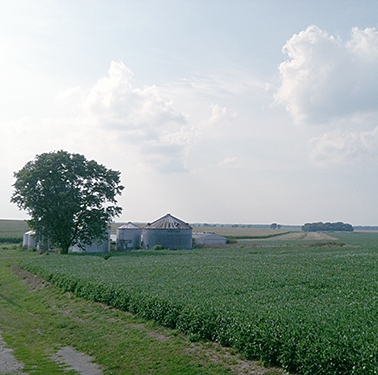
On behalf of a private U.S. agricultural technology provider, WPI’s team generated an econometric model to forecast the movement of concentrated corn production north and west from the traditional U.S. Corn Belt. WPI’s model has subsequently provided quantitative support to a multi-million-dollar investment into short-season corn variety development. WPI’s methodology included a series of interviews with regional grain elevators and seed consultants. Emphasizing outreach and communication with stakeholders who possess intimate sectoral knowledge – on-the-ground insights – is a regular component of WPI’s methodologies, made possible by WPI’s ever-growing network of industry contacts.