


February is often a time of optimism for world agricultural producers, at least those residing in the Northern Hemisphere. When viewed in February, one to three months before new spring crops are actually planted, production prospects nearly always look rosy: planted area will be large, yields will be big, and production totals will be bountiful. USDA's annual budgetary baseline numbers are perfect examples. Invariably, budget forecasts of government expenditures for the next fiscal year are based on assumptions that minimize spending forecasts for political reasons. Under U.S. farm programs, expenditures decline when crops are large. Thus, it suits the budgetary purposes of any administration for USDA to use big crop production numbers w...


 What You Need to Know Today: Declining crop conditions ratings and shaky results from the Pro Farmer crop tour sent grains sharply higher on Tuesday. The Pro Farmer tour in Ohio pegged the state yield at 180.18 BPA, about 5.5 BPA below the tour’s 2025 estimate. Similarly, the Pro Farmer...
 Mediterranean/Middle East/North Africa/Africa – MEA Region Egypt is the largest importer of Brazilian maize in the first six months of 2026. Egypt imported about 28.4 percent of maize exports, or about 1.7 million MT. Iran was the third-largest importer at 14.5 percent, or 900,000 MT, fol...

 Based on a Depression-era statute, President Trump imposed 50 percent tariffs on $20 billion of exports to the U.S., or about 5.2 percent of the $383 billion worth of goods the U.S. imported from Canada in 2025, according to U.S. Census Bureau data. Of that total, about $39.3 billion was agricu...

From WPI Consulting
Infrastructure investment due diligence
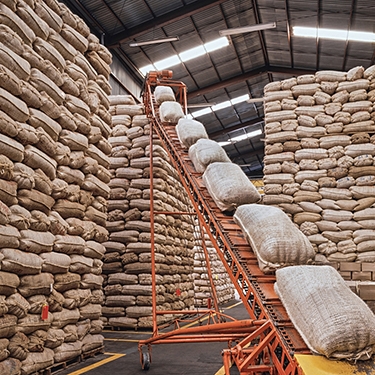
On behalf of a Canadian oilseed processer WPI's team provided market analysis, econometric modeling and financial due diligence in support of a $24 million-dollar investment in a Ukrainian crush plant. Consistent with WPI's findings, local production to supply the plant and the facility's output have expanded exponentially since the investment. WPI has conducted parallel work on behalf of U.S., South American and European clients, both private and public, in the agri-food space.