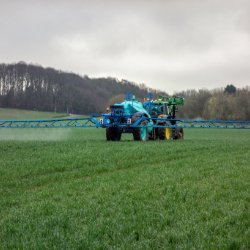
The war in Iran has brought the four-year simmering focus on fertilizer prices to a quick boil. Senate Majority Leader John Thune (R-South Dakota) introduced the Fertilizer Transparency Act, cosponsored by Amy Klobuchar (D-Minnesota), Chuck Grassley (R-Iowa), and Tammy Baldwin (D-Wisconsin), which would require mandatory price reporting on fertilizer and fertilizer products, similar to the process for dairy and meat. The bill is intended to respond to longstanding concerns over rising input costs and would require the USDA to collect and publish data on fertilizer prices from manufacturers on a weekly basis. The South Dakota Corn Growers issued a statement: Since 2022, corn farmers have paid record-setting prices for fertilizer...



 Commodity markets moved in the same direction today, although the reasons behind the weakness are anything but simple. Metals, energy and grains all faced selling pressure, while cattle managed to move against the broader trend. What makes this particularly interesting is that these markets hav...
 Key Takeaways: China’s lagging agricultural purchases have attracted considerable attention, but the broader impact on U.S. agricultural exports may be overstated. China’s $17 billion annual non-soybean purchase commitment represents a return to historical trade levels that may no...

 Key Takeaways: Biodiesel demand will continue to drive the U.S. soy complex and provide a supportive environment for expanding both soybean production and utilization. WPI expects U.S. biofuel producers to use roughly 20 billion pounds of soyoil in 2027/28, up from 17.8 billion in 2026/2...

From WPI Consulting
Communicating importance of value-added products

Facing increasing pressure to quantify the value of export promotion efforts to investors, a U.S. industry organization retained WPI to develop a quantitative model that better communicated the importance of exports. The resulting model concluded that value-added meat exports contributed $0.45 cents per bushel to the price of corn, increasing support for that sector’s financial support of WPI’s client. In addition to serving the red meat industry with this type of analysis, WPI has generated similar deliverables for the U.S. soybean and poultry/egg industries.