
VAT versus Trump Tariffs Most imports into the U.S. will face an average 15 tariff under Trump trade policy. Critics and news reports warned of disastrous impacts that have thus far failed to develop. This may be due to their relative context. Most countries apply tariffs such as the EU’s average tariff of 8.4 percent for agricultural products. But in addition, 170+ countries apply a value added tax (VAT) that is much more pernicious. That is because an import tariff is paid once and may be dispersed across the supply chain, whereas the VAT is applied at each step in the value chain. For example, a kernel of corn imported into the U.S. pays the duty once no matter its ultimate transformation, but a kernel of corn imported into t...



 What You Need to Know Today: The Brazilian real surged to start the week after a surprise election result in which right-wing Flavio Bolsonaro won the first round of the election. The swing in the U.S. dollar/Brazilian real (USD/BRL) exchange rate caused soybeans to jump sharply higher in earl...
 Key Takeaways: Harvest pressure is fundamentally a timing issue: supply arrives much faster than demand can adjust, creating temporary weakness that can occur across crops and regions. The intensity of that pressure depends less on crop size alone than on how quickly grain moves into the syste...

 Pork packer margins closed out September as positive, marking an improvement in a challenging 2026. According to Sterling Marketing, for the week ending 26 September, pork packer margins were $6.98 per head, which is up from a loss of $0.13 the previous week, more than double the margin of $3.9...

From WPI Consulting
Infrastructure investment due diligence
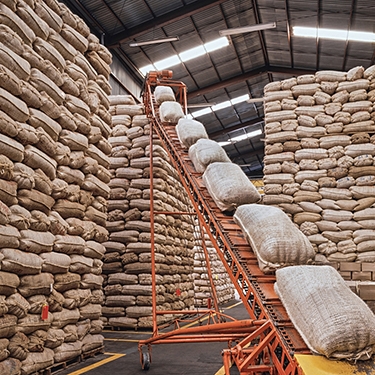
On behalf of a Canadian oilseed processer WPI's team provided market analysis, econometric modeling and financial due diligence in support of a $24 million-dollar investment in a Ukrainian crush plant. Consistent with WPI's findings, local production to supply the plant and the facility's output have expanded exponentially since the investment. WPI has conducted parallel work on behalf of U.S., South American and European clients, both private and public, in the agri-food space.