
Venting Hypocrisy At a BRICS meeting this past weekend, Brazilian President Luiz Inacio Lula da Silva characterized President Trump’s use of tariffs as a tool of “blackmail.” The formal definition of blackmail involves demanding benefit from someone in exchange for not revealing compromising or damaging information about them. In other words, if Brazil did not have compromising problems like historically applying high duties on imports from the U.S. as it does on ethanol, there would be less leverage against his country in the trade war. China’s Ambassador to India, Xu Feihong, told his Indian audience that the U.S. has long benefited from free trade, but now uses tariffs as a weapon to gain exorbitant demands...



 What You Need to Know Today: The Brazilian real surged to start the week after a surprise election result in which right-wing Flavio Bolsonaro won the first round of the election. The swing in the U.S. dollar/Brazilian real (USD/BRL) exchange rate caused soybeans to jump sharply higher in earl...
 Key Takeaways: Harvest pressure is fundamentally a timing issue: supply arrives much faster than demand can adjust, creating temporary weakness that can occur across crops and regions. The intensity of that pressure depends less on crop size alone than on how quickly grain moves into the syste...

 Pork packer margins closed out September as positive, marking an improvement in a challenging 2026. According to Sterling Marketing, for the week ending 26 September, pork packer margins were $6.98 per head, which is up from a loss of $0.13 the previous week, more than double the margin of $3.9...

From WPI Consulting
Infrastructure investment due diligence
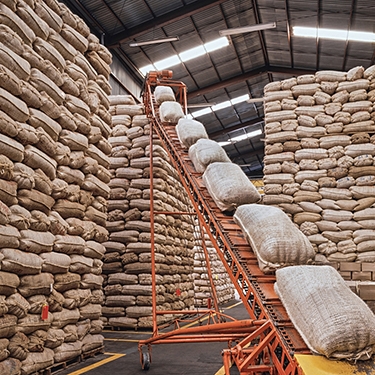
On behalf of a Canadian oilseed processer WPI's team provided market analysis, econometric modeling and financial due diligence in support of a $24 million-dollar investment in a Ukrainian crush plant. Consistent with WPI's findings, local production to supply the plant and the facility's output have expanded exponentially since the investment. WPI has conducted parallel work on behalf of U.S., South American and European clients, both private and public, in the agri-food space.