
Yesterday, Argentina temporarily stopped its export tax on grains and co-products, as well as beef and poultry, something President Javier Milei had proposed during his campaign. The final decision, however, came as the country is desperate for U.S. dollars to shore up the flagging peso. Further, the move is about a month out from congressional elections. The decree signed yesterday applies to soy, subject to a 26 percent export tax, corn subject to a 9.5 percent tax, and wheat, and all by products – including biodiesel. Soyoil and meals are subject to a 24.5 percent export tax. It will last until the end of October, or until exports reach $7 billion. U.S. Treasury Secretary Scott Bessent indicated that swap lines, direct...



 Key Takeaways: Harvest pressure is fundamentally a timing issue: supply arrives much faster than demand can adjust, creating temporary weakness that can occur across crops and regions. The intensity of that pressure depends less on crop size alone than on how quickly grain moves into the syste...

 Pork packer margins closed out September as positive, marking an improvement in a challenging 2026. According to Sterling Marketing, for the week ending 26 September, pork packer margins were $6.98 per head, which is up from a loss of $0.13 the previous week, more than double the margin of $3.9...
 Wheat Argentina Argentina’s wheat conditions improved following the latest round of rainfall. Around 34 percent of the crop is now at heading or later stages, with the first harvests starting in the north and early yields coming in above historical averages. The area rated Good to Excelle...
 In a recent social media post, R-CALF unveiled its latest cattle market plan: “contracts that bind producers before establishing a base price, then tie that price to future negotiated cash transactions, should be prohibited.” That proposal aligns with recent legislation by Represent...

From WPI Consulting
Infrastructure investment due diligence
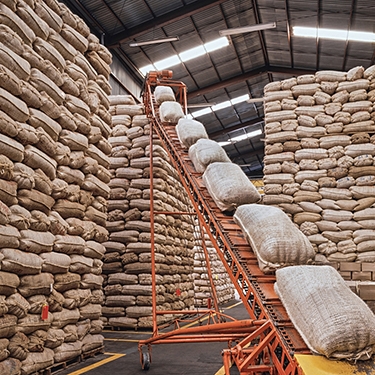
On behalf of a Canadian oilseed processer WPI's team provided market analysis, econometric modeling and financial due diligence in support of a $24 million-dollar investment in a Ukrainian crush plant. Consistent with WPI's findings, local production to supply the plant and the facility's output have expanded exponentially since the investment. WPI has conducted parallel work on behalf of U.S., South American and European clients, both private and public, in the agri-food space.