
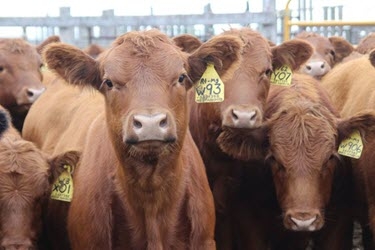
The year 2019 was difficult for cow-calf producers as a series of unexpected weather events, heavy winter snowstorms that reduced calf survival rates and massive spring flooding, caused challenges for the industry. Following that was weakness in feeder cattle prices through the summer and the sudden market collapse in August due to the Tyson packing plant fire in Kansas. Some of the little good news that producers received was the fall/winter rally in cattle prices that eventually brought value back above pre-August crash levels. In total, however, 2019 handed cow/calf producers their worst financial losses since 2010, with the “average” ranch in Kansas (WPI’s base region for modeling purposes) losing $25/cow unit. ...



 What You Need to Know Today: President Trump claimed the ceasefire between the U.S. and Iran was over, as both sides accused one another of violating the terms of the agreement. Commercial vessels are increasingly steering clear of the Strait of Hormuz as security risks escalate following Iran...
 Key Takeaways: The CME Group is launching new 90 percent Lean Beef and 50 percent Lean Beef futures and options contracts in July. There are five key factors that must be present in physical markets and futures contract specifications for futures contracts to become successful. The two l...
 WPI Grain Prices and Freight Rate App Note: you can also visit the app directly by clicking here. Supplemental Information The section below offers a concise view of the options available in the current version of the WPI FOB Price and Freight Rate app, along with a short “...

From WPI Consulting
Illuminating the value of technical research

On behalf of a commodity producer organization, WPI evaluated the outputs from a project that featured a $5 million investment into technical research over multiple years. WPI’s team captured the results of this extensive effort and synthesized them for presentation to the organization’s governing board; among the findings uncovered and presented for the first time was the development of genomic traits proven, via rigorous testing, to provide crop yield advantages of 50 percent or more to U.S. farmers in times of drought. Capturing measurable results from long-term efforts can be challenging. Educating clients on the dynamics of success measurement when quantifiable results are not readily available requires deep client-consultant collaboration and an ability to consider both near- and long-term client aspirations with market/policy dynamics – attributes that WPI brings to every consulting engagement.