
Ag as Affordability Solution Around 12 percent of Americans received federal food assistance (SNAP) and 10 percent are classified as living below the poverty line but financial analyst Michael W. Green has controversially calculated the threshold at $136,500/year. After all, a family of four living in New York City on over $100,000/year certainly feels financially stressed. The media is hyper-focused on the top line number but the more notable aspect to this economic debate for WPI readers is food and its solution to the current affordability debate. America’s poverty threshold was originally developed in the early 1960’s by Social Security Administration statistician Mollie Orshansky. Her metric was based on who could afford US...



 What You Need to Know Today: Wheat futures pulled back sharply after Russian President Putin said there was a “chance” for peace and an agreement to end the war in Ukraine. There is plenty of skepticism about the opportunity for peace in Ukraine, but that didn’t stop wheat fr...

 President Trump has opened the door to 100,000 MT of beef lean trimmings (limited to HTS codes 0201.30.5091, 0201.30.5097, 0202.30.5091, and 0202.30.5097) from countries listed under the “Other Countries” TRQ effective 1 September. These imports would not be subject to the over-quot...

 Key Takeaways: CHS and OCP plan to invest up to $450 million in a Louisiana phosphate fertilizer facility capable of producing more than 1 MMT annually, marking the first new U.S. plant of its kind in more than 40 years. The facility could reduce U.S. dependence on imported finished phosphate...

From WPI Consulting
Infrastructure investment due diligence
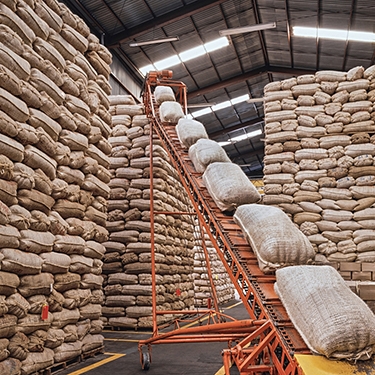
On behalf of a Canadian oilseed processer WPI's team provided market analysis, econometric modeling and financial due diligence in support of a $24 million-dollar investment in a Ukrainian crush plant. Consistent with WPI's findings, local production to supply the plant and the facility's output have expanded exponentially since the investment. WPI has conducted parallel work on behalf of U.S., South American and European clients, both private and public, in the agri-food space.