


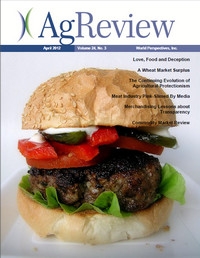
Love, Food and Deception More rants on the lies that are told about the agrifood system, and those who seek to deceive us. A Wheat Market Surplus The era of government-controlled wheat exports by major exporters is gone, and if we may say so, with good riddance. The evolution of the world wheat market and the disengagement of governments has meant, among other things, that a geographically dispersed private sector marketing chain extending from wheat growers to wheat users must shoulder all of the risks involved -- including, most importantly, price risk. The Continuing Evolution of Agricultural Protectionism As long as there has been international agricultural trade, countries have used some form of protectionism to safeguard their pr...


 What You Need to Know Today: Harvest pressure in the U.S. sent corn and soybeans lower as supplies increased and there were signs USDA’s upward revisions to yields in the October WASDE could be close to right. The conflict between Russia and Ukraine escalated over the weekend, with Ukrai...

 Key Takeaways: India is excluding sugarcane juice, sugar syrup, and B-heavy molasses from its 2026/27 fuel ethanol procurement program to protect domestic sugar supplies, potentially shifting additional demand toward corn and rice. India’s corn consumption for ethanol has surged from jus...
 Developer's Note 24 August 2026: WPI recently completed an exercise that updated the codebase for this app and solved some of the discrepancies between our five-year average calculation and USDA's. There are a few lingering cases where early (late) starts (finishes) to the crop cycle resu...

From WPI Consulting
Infrastructure investment due diligence
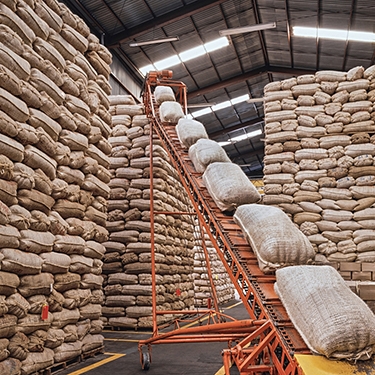
On behalf of a Canadian oilseed processer WPI's team provided market analysis, econometric modeling and financial due diligence in support of a $24 million-dollar investment in a Ukrainian crush plant. Consistent with WPI's findings, local production to supply the plant and the facility's output have expanded exponentially since the investment. WPI has conducted parallel work on behalf of U.S., South American and European clients, both private and public, in the agri-food space.