

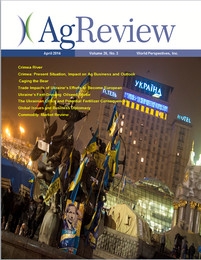
Crimea River History suggests that geopolitical troubles have less impact on food production than fundamentals like the weather. Crimea: Present Situation, Impact on Ag Business and Outlook A firsthand account of the situation in Ukraine and its impacts on grain and oilseed markets. Caging the Bear Does the Western rejoinder to Russia's seizure of Crimea have the potential to nullify its gains and cause significant damage to the Russian economy? Trade Impacts of Ukraine's Efforts to Become European The roots of the current destabilization in Ukraine go back 60 years over the issue of Crimea and are unfolding much like the Russian-Georgian conflict earlier in this decade. Ukraine's Fast-Growing Oilseed Sector Another reason for Russ...



 What You Need to Know Today: Harvest pressure in the U.S. sent corn and soybeans lower as supplies increased and there were signs USDA’s upward revisions to yields in the October WASDE could be close to right. The conflict between Russia and Ukraine escalated over the weekend, with Ukrai...
 Developer's Note 24 August 2026: WPI recently completed an exercise that updated the codebase for this app and solved some of the discrepancies between our five-year average calculation and USDA's. There are a few lingering cases where early (late) starts (finishes) to the crop cycle resu...
 Argentina Sunflower Sunflower remains one of the most attractive crops in Argentina, supported by strong demand and favorable prices that currently offer some of the best projected production margins among summer crops. Planted area is estimated at 3.0-3.1 Mha, with around 42 percent already se...

From WPI Consulting
Infrastructure investment due diligence
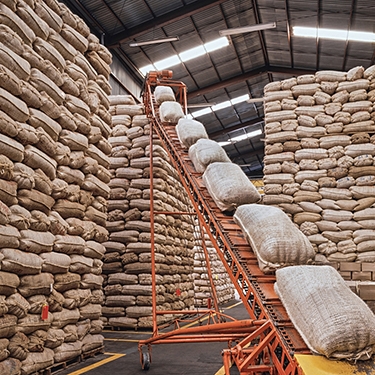
On behalf of a Canadian oilseed processer WPI's team provided market analysis, econometric modeling and financial due diligence in support of a $24 million-dollar investment in a Ukrainian crush plant. Consistent with WPI's findings, local production to supply the plant and the facility's output have expanded exponentially since the investment. WPI has conducted parallel work on behalf of U.S., South American and European clients, both private and public, in the agri-food space.