

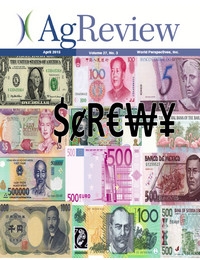
Currency Valuation and Trade The Federal Reserve's interest rate decision and the strong U.S. dollar weigh on commodity trading decisions. The TPP and a Provision to Prevent Currency Manipulation There has been a push from certain U.S. sectors to add a provision to the TPP that would prevent signatories from engaging in currency manipulation. Is this a convenient rationale to oppose the agreement or a principled negotiating position? An Appreciating U.S. Dollar in the U.S. Fertilizer Trade The U.S. is a large part of the international fertilizer trade. With more than 40 MMT at an aggregate value exceeding $14 billion moved in and out of the country in 2014, currency fluctuations can and do have a profound impact on this trade sector...



 What You Need to Know Today: Harvest pressure in the U.S. sent corn and soybeans lower as supplies increased and there were signs USDA’s upward revisions to yields in the October WASDE could be close to right. The conflict between Russia and Ukraine escalated over the weekend, with Ukrai...
 Developer's Note 24 August 2026: WPI recently completed an exercise that updated the codebase for this app and solved some of the discrepancies between our five-year average calculation and USDA's. There are a few lingering cases where early (late) starts (finishes) to the crop cycle resu...
 Argentina Sunflower Sunflower remains one of the most attractive crops in Argentina, supported by strong demand and favorable prices that currently offer some of the best projected production margins among summer crops. Planted area is estimated at 3.0-3.1 Mha, with around 42 percent already se...

From WPI Consulting
Communicating importance of value-added products

Facing increasing pressure to quantify the value of export promotion efforts to investors, a U.S. industry organization retained WPI to develop a quantitative model that better communicated the importance of exports. The resulting model concluded that value-added meat exports contributed $0.45 cents per bushel to the price of corn, increasing support for that sector’s financial support of WPI’s client. In addition to serving the red meat industry with this type of analysis, WPI has generated similar deliverables for the U.S. soybean and poultry/egg industries.